Smart energy and building monitoring for Irish schools
Cut energy waste, protect the building, and improve pupil cognitive performance, with one continuous-monitoring stack that also automates the school's SEAI Monitoring & Reporting return.
Three forces converge on the school estate in 2026
Climate Act 2021
The public sector, schools included, must deliver 51% GHG reduction and 50% energy-efficiency improvement by 2030. The EPA's 2025 projections put Ireland on course for only 22–29%. The direction of travel on the school estate is clear.
Climate Action Summer Works Scheme
Replacing the old Summer Works Scheme from 2026, CASWS conditions grant eligibility on annual SEAI Monitoring & Reporting compliance, exactly the dataset Optim Energy's hardware produces automatically. First tranche delivers summer 2026.
EPBD recast
Directive 2024/1275 requires solar-ready obligations on existing public buildings over 250 m² progressively from 31 December 2027, with national transposition due 29 May 2026. Building Automation and Indoor Environmental Quality are explicitly addressed.
Three pillars: efficiency, safety, cognitive performance
Energy efficiency
"20–30% of school energy is wasted, mostly when nobody's there."
Heating dominates the Irish school energy stack at 60–70% of total consumption (SEAI). Most school buildings predate 2008 and run on rudimentary controls, fixed-time clocks misaligned with term dates, boilers cycling through holidays, no zoning, unmonitored hot-water loops. The Energy Sparks dataset of over 1,000 UK schools shows roughly 45–50% of school electricity is consumed outside teaching hours, and the equivalent waste in heating during half-terms and summer is the largest single addressable loss in any school estate.
The levers are well understood: a 1°C reduction in setpoint saves 5–10% of heating energy; trimming run-time by one hour a day saves another ~5%; sub-metering visibility alone is worth around 10% before any control changes are made. The Energy Sparks portfolio records average savings of £5,000/year and 7 tonnes CO₂ per primary school, and £21,000/year and 26 tonnes per secondary, the latter equivalent to a newly-qualified teacher's salary. SEAI's own Pathfinder pilot has retrofitted 53 schools to date and delivers an average 36% energy cost reduction across the cohort, typically moving buildings from C1 to B1 or D1 to B3 on the BER scale.
Building safety
"Schools sit empty for ~13 weeks a year. That's when things go wrong."
UK insurers pay out around £1.8 million a day on water-related claims. The single most resonant case in the schools sector is St George's, Edgbaston, where a Christmas-break boiler leak destroyed an entire IT department's ceiling, light fittings and equipment over the holiday, the type of incident every Irish bursar fears. The school's insurer subsequently funded a full leak-detection install. Smart-metering studies record 5–22% reductions in water consumption post-installation, rising to 46% when previously undetected leaks are caught and fixed.
Beyond water, contact sensors on chemical stores, IT cabinets and external doors trigger out-of-hours alerts; open-window sensors integrated with TRVs pause heating in any zone with windows open (peer-reviewed research records avoidable losses of 12.83 kWh per classroom per day during the heating season, avoidable 67% of the time); and automated TMV temperature monitoring eliminates the one-to-two caretaker-days per month that manual Legionella checks consume on a typical secondary.
Pupil cognitive performance
"Air quality in Irish classrooms is a measured problem."
The most recent peer-reviewed Irish data, TU Shannon, Trinity College Dublin and University of Limerick (MDPI, 2024), measured eight naturally ventilated primary classrooms with means of 796–2,469 ppm; seven of the eight exceeded national CO₂ guidelines. A separate nine-school multi-zone Irish study (Building & Environment, 2025) recorded median classroom CO₂ of 1,319 ppm, with PM2.5 exceeding the WHO 24-hour 15 µg/m³ threshold on 48% of days.
The cognitive evidence is hard to dismiss. The Harvard COGfx study (Allen et al., 2016) found cognitive function scores 15% lower at ~945 ppm CO₂ and 50% lower at ~1,400 ppm versus a 550 ppm baseline. Bakó-Biró et al. (2012) recorded up to 15% improvement in attention, concentration and memory in eight UK primary schools when ventilation was raised from 1 to 8 l/s per pupil. Mendell et al. (2013), tracking 162 California classrooms across 28 schools for two years, found a 1–2% relative drop in absenteeism for every 100-ppm fall in classroom CO₂.
The Department of Education distributed roughly 35,400 portable CO₂ monitors to every school during 2021–22 in response to COVID. Those monitors don't log, don't alert and don't control anything. Schools have been told by the State that classroom CO₂ matters, given the equipment to see the problem, and left without the means to act on it. The control layer that closes that loop is what Optim Energy provides.
A modular monitoring and control stack
Each capability can stand on its own or form part of a phased programme. One possible starting point is sub-metering and selected classroom CO₂ monitoring, followed by heating, lighting and water measures where the campus evidence and funding route support them.
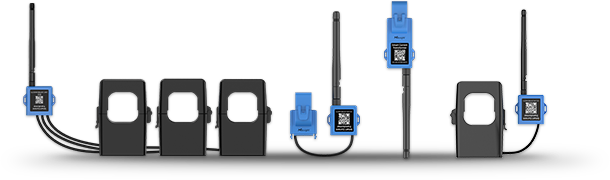
Granular energy visibility
CT-clamp sub-metering on the distribution board breaks the school's energy bill into per-circuit and per-zone data: heating, lighting, ICT, kitchen, sports hall, prefabs. Sub-metering visibility alone has been shown to deliver around 10% savings before any control changes are made, the school simply sees where the waste is and acts on it.
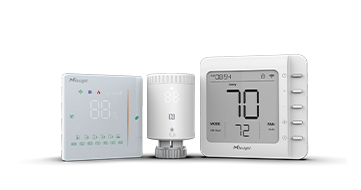
Heating optimisation
Smart TRVs, boiler-control integration, and occupancy-driven scheduling replace the typical Irish school setup of fixed-time clocks and manual on/off control. A 1°C reduction in setpoint saves 5–10% of heating energy; trimming run-time by one hour a day saves another ~5%. Open-window contact sensors integrated with TRVs pause heating in any zone with windows open, peer-reviewed research records avoidable losses of 12.83 kWh per classroom per day during the heating season.
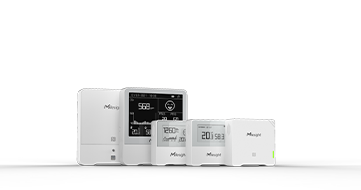
Air quality & demand-controlled ventilation
Continuous CO₂, temperature, and humidity sensors drive Optim Vent and any existing MVHR (heat recovery ventilation) system. Demand-controlled ventilation is one of the rare interventions that simultaneously lowers CO₂ and lowers bills, typical HVAC savings of 20–40%. The control logic aligns with the Department of Education's REHVA threshold (open windows above 800 ppm; action point 1,500 ppm) and BB101-style hybrid demand control, replacing the portable CO₂ monitors that schools were given during COVID with a system that can actually act on what it sees.
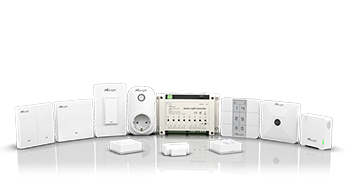
Lighting automation (GDPR-friendly)
Occupancy and daylight-harvesting controls cut lighting energy 24% from occupancy alone, and 38–60% combined with LED. Sensors use motion or radar only, no cameras, no audio, no personal data. The most-cited school case is Parrs Wood High in Manchester, where occupancy-driven HVAC cut waste from 80% to 1% and saved £9,000 a year.
Anomaly detection
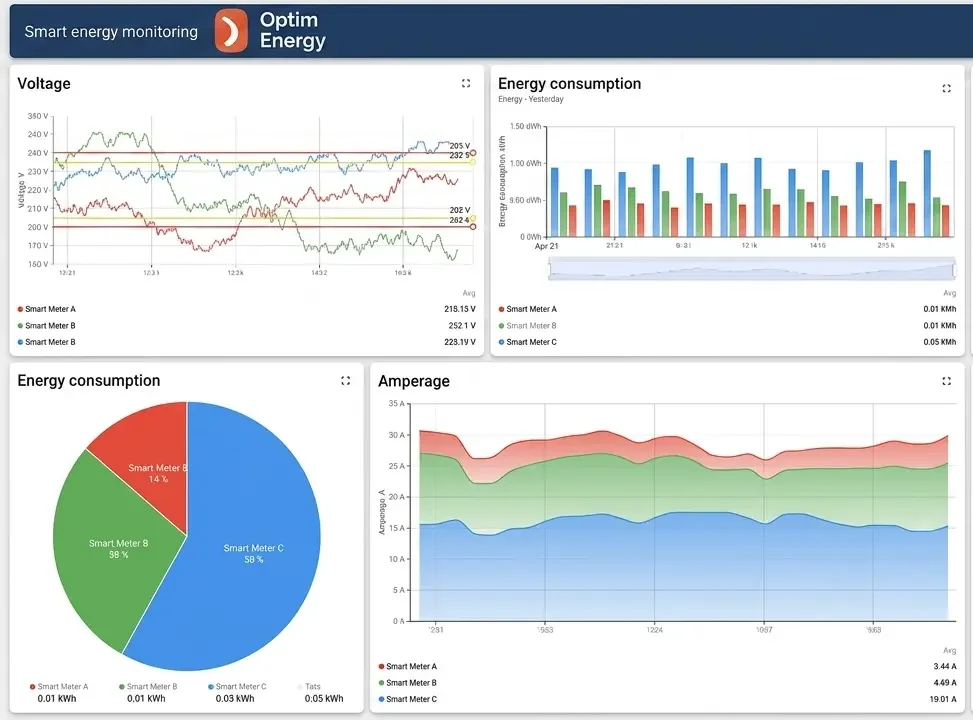
Out-of-hours consumption, equipment drift, and overridden schedules are caught automatically. Predictive maintenance saves 25–30% of total maintenance cost and 35–45% of equipment downtime, particularly important for boilers, where a mid-January failure closes a school. The dashboard provides role-scoped views: principal, caretaker, and Board each see the KPIs that matter to them.
Water-leak detection
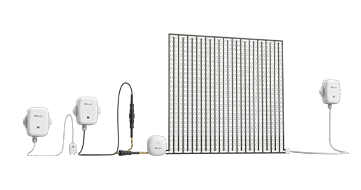
Wireless flow and leak sensors on plant rooms, kitchens, and toilet blocks catch bursts within minutes. Schools sit empty for roughly 13 weeks a year, and that is exactly when undetected water damage happens, UK insurers pay out around £1.8 million a day on water-related claims. Smart metering trims water consumption 5–22% in normal operation, rising to 46% when previously undetected leaks are found and fixed.
Doors, cabinets & chemical-store monitoring
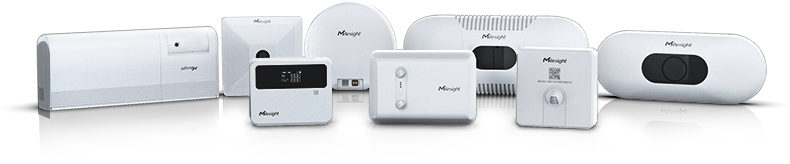
Magnetic contact sensors on chemical stores, IT cabinets, external doors and windows trigger out-of-hours alerts. They retrofit without wiring and pay back on heating energy alone in under a year by integrating with the BEMS to pause heating when external doors are propped open.
One dashboard, Optim EOS
Everything above feeds the Optim EOS dashboard, hosted in Ireland. The principal sees the headline KPIs and grant-readiness status; the caretaker sees the operational view (alerts, schedules, current setpoints); the Board sees the financial and compliance picture. The same data automatically populates the school's annual SEAI Monitoring & Reporting return.
Two options that resonate with secondary-school principals
Vape detection in toilets
Sensors inside toilet cubicles detect TVOC, particulate matter and aggression-level sound, without recording audio or capturing images. Cameras (where used) are mounted outside toilet entries only. Reference: Gorey Community School in Wexford, Ireland's largest secondary at 1,600+ students, reported a 97% reduction in vape events (from 15–20 a day to roughly three a week) after deployment.
Solar PV monitoring & expansion
Schools that received the Department of Education's Schools Photovoltaic Programme installation get a fully funded 6 kWp system plus a mandatory display screen, but most use that screen as a static poster. Optim Energy turns it into a live operational dashboard showing real generation, self-consumption and export, and supports the path to expanding beyond the 6 kWp cap via the SEAI Non-Domestic Microgeneration Grant where the school qualifies.
What schools are already achieving
A short tour of published outcomes from Irish and UK schools, used to frame what the school's own baseline and operating data should test.
SEAI Pathfinder cohort
53 schools, average 36% energy cost reduction; typical BER moves include C1→B1, D1→B3, C3→B2.
Energy Sparks portfolio (UK, 1,000+ schools)
Average £5,000/year and 7 t CO₂ saved per primary; £21,000/year and 26 t per secondary, equivalent to a newly-qualified teacher's salary.
Northampton Academy
40% gas reduction from boiler-control changes alone.
Whiteways Primary
35% gas reduction, same approach.
Parrs Wood High School (Manchester)
Occupancy sensors cut HVAC waste from 80% to 1%; £9,000/year saved, 31 t CO₂ avoided.
Waverley School (Enfield)
Combined boiler + BMS + LED retrofit delivered 24.6% annual saving and £30,000/year, ~8-year payback at £242,000 capital.
Gorey Community School (Wexford)
Ireland's largest secondary at 1,600+ students; vape detection delivered a 97% reduction in vape events (15–20/day → ~3/week).
Our four-step process
Independent evidence where needed
Where an independent professional energy audit is needed, we help coordinate the process and ensure its findings can inform practical system design, procurement and investment decisions. Potential support is checked against current programme rules.
Tailored design and quote
A hardware and software specification matched to the building, its current systems, and the priorities the audit surfaces, not a one-size-fits-all kit.
Installation
Typically scheduled during mid-term or weekend so the school is empty. Wireless sensors and battery-powered devices retrofit without ductwork or structural work.
Continuous monitoring & support
Quarterly reviews, optimisation, and ongoing upgrades. The same data automatically populates the school's annual SEAI Monitoring & Reporting return.
Where the money may come from
Eligibility for each scheme depends on the school's profile, the project scope and SEAI's current programme rules. We help assess fit and apply where appropriate, we don't promise grants we can't deliver.
If controls, sub-metering or a building management system form part of the scope, read our practical guide to BMS grants in Ireland before ordering equipment or starting work.
SEAI Support Scheme for Energy Audits (SSEA)
May support an independent professional energy audit where the school and project meet the current scheme rules.
Climate Action Summer Works Scheme (CASWS)
Funds LED, BMS, mech/elec, fabric and EV chargers. From 2026, conditioned on SEAI Monitoring & Reporting compliance, which Optim Energy's hardware produces automatically. First tranche delivers summer 2026.
SEAI Schools Energy Pathfinder
A selection-based deep-retrofit route. Documented monitoring data can support evidence-led planning, but does not guarantee selection.
SEAI EXEED
May support eligible design and project work under the current programme rules; measurement and verification requirements are confirmed per project.
SEAI Better Energy Communities / Community Grant
May provide a route for eligible bundled school or community projects.
SEAI Non-Domestic Microgeneration Grant
May support eligible solar PV expansion under the current scheme rules.
Pay-from-savings option
Reduces upfront capex barrier where the school's budget is constrained, with the deployment paid for from the savings it generates.
Schools FAQ
Will the install disrupt school operations?
We already submit annual SEAI Monitoring & Reporting (M&R) returns. What changes?
GDPR, do the occupancy sensors capture personal data? What about vape detectors in toilets?
We have solar PV from the Schools Photovoltaic Programme. Does this work with that?
Can we start small and expand?
Does SEAI fund this? Which scheme fits us?
If you're weighing up monitoring, a grant-funded audit is the place to start.
Start with the school's current operating picture and funding route. We will identify the evidence and institutional support needed for a viable next step.