Understand the building without compromising resident care
When you are responsible for residents, staff and the operating margin, it can be difficult to know which building issues need action and which changes are safe to make. Optim Energy gives you a measured basis for decisions on comfort, energy use, premises risk and investment.
A building issue is difficult to address when you cannot see its cause, the risk of changing it or whether the response has worked.
Residents or staff report rooms that are too warm or too cold, but the pattern is unclear.
Energy use runs continuously, yet it is difficult to separate essential care demand from avoidable plant operation.
Heating, hot water or ventilation may be operating outside the schedules and conditions the home intends.
Premises and indoor-condition records are spread across checks, systems and people when you need to review an exception.
You are considering controls, maintenance or capital work without a reliable baseline for the decision.
Different homes in the estate cannot be compared fairly using monthly bills alone.
What changes
Know what needs attention, what is safe to change and whether the response worked.
You, the Person in Charge and facilities team can work from a clearer shared record, while the home retains its care, clinical and water-safety responsibilities.
See conditions clearly
Understand comfort, plant and energy patterns without treating essential care demand as waste.
Respond with confidence
Investigate exceptions and make agreed changes with appropriate safeguards and staff override.
Evidence oversight
Retain time-stamped alerts and response history for premises governance and inspection preparation.
Not every home needs a full Optim EOS deployment. Optim Energy will recommend focused monitoring, an independent assessment or a simpler action when that is the more proportionate next step.
What a deployment could include
A modular monitoring and control stack
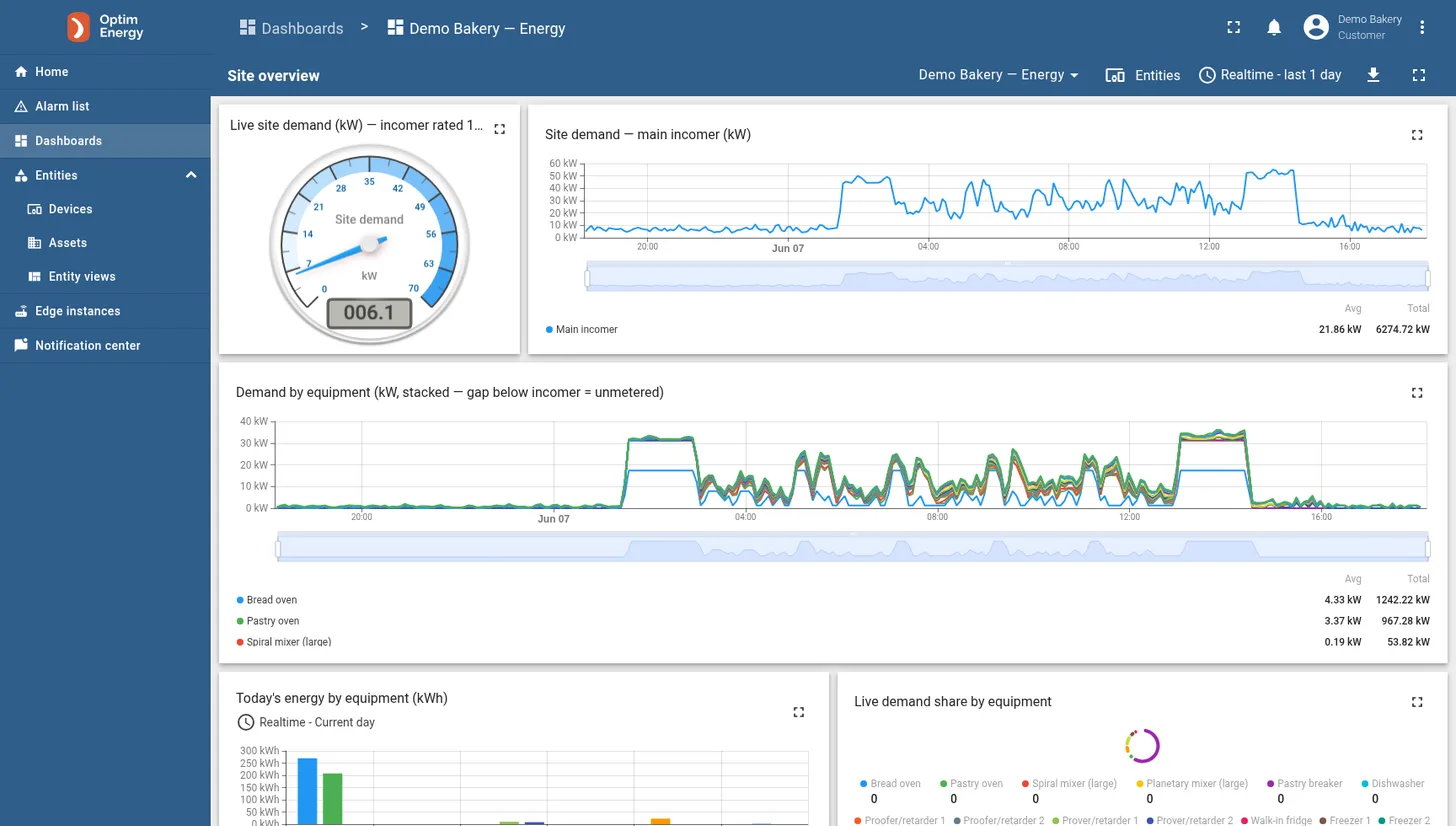
Optim EOS is the Energy Operating System, Optim Energy's building-performance platform delivered technically as a BEMS. It can bring selected energy readings, plant states, indoor conditions, alerts, response history and compatible controls into one view. You can begin with one operating problem and add further areas only when the evidence justifies it.
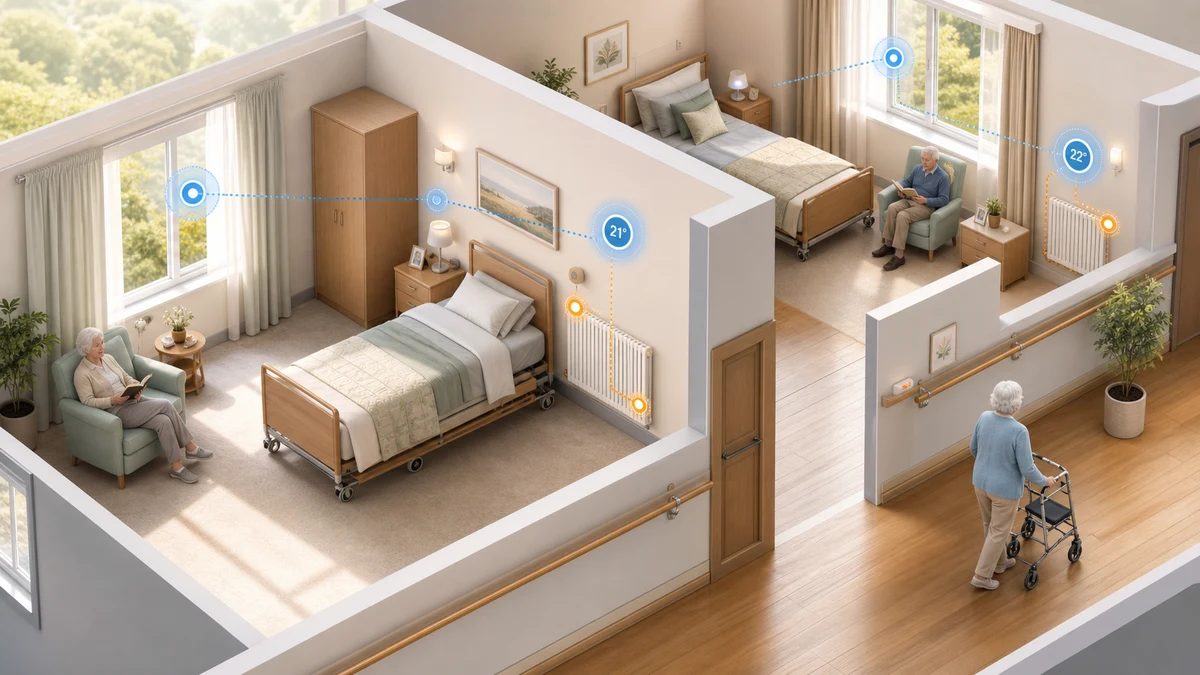
Heating, comfort & open-window evidence
Room and zone trends can reveal persistent over- or underheating, out-of-hours operation and heat supplied while windows or external doors are open. Where the existing heating system and valves are compatible, agreed controls may respond within provider-defined comfort limits, schedules, exception rules and staff overrides.
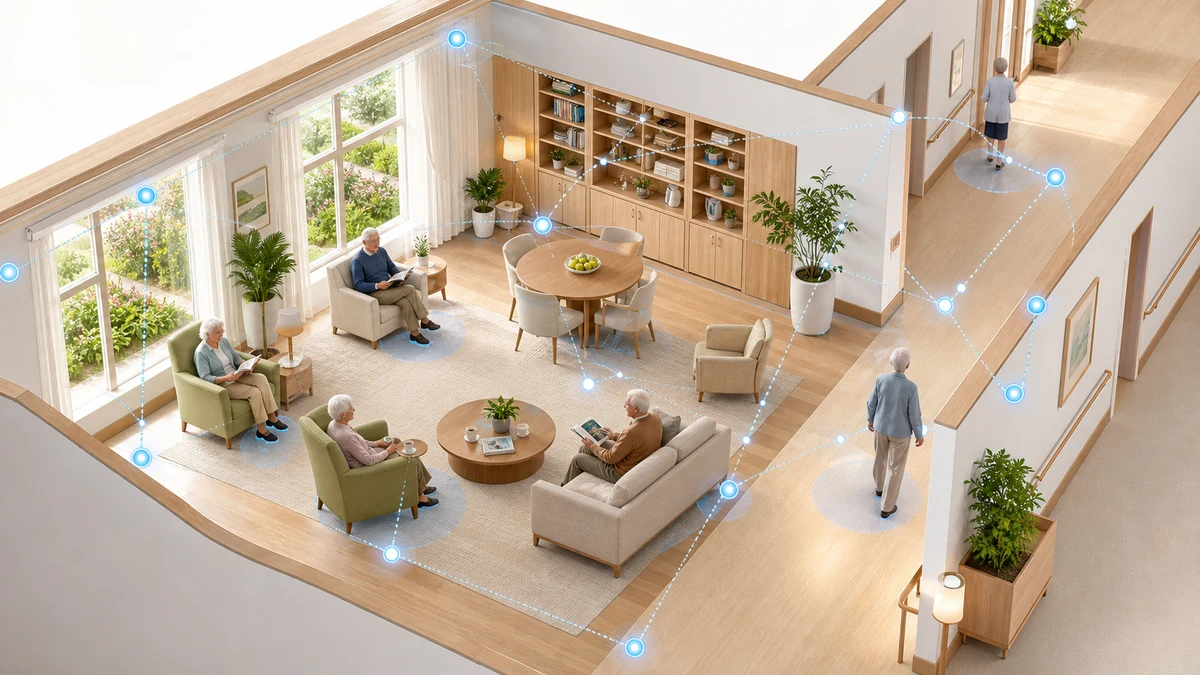
Camera-free presence & lighting
Radar, PIR and Time-of-Flight sensors can provide anonymous occupied or vacant signals without capturing images, video, audio or personal identifiers. Those signals can inform lighting and other agreed building controls. Sensor choice, placement, fallback behaviour and automation rules follow the care context and preserve staff override.
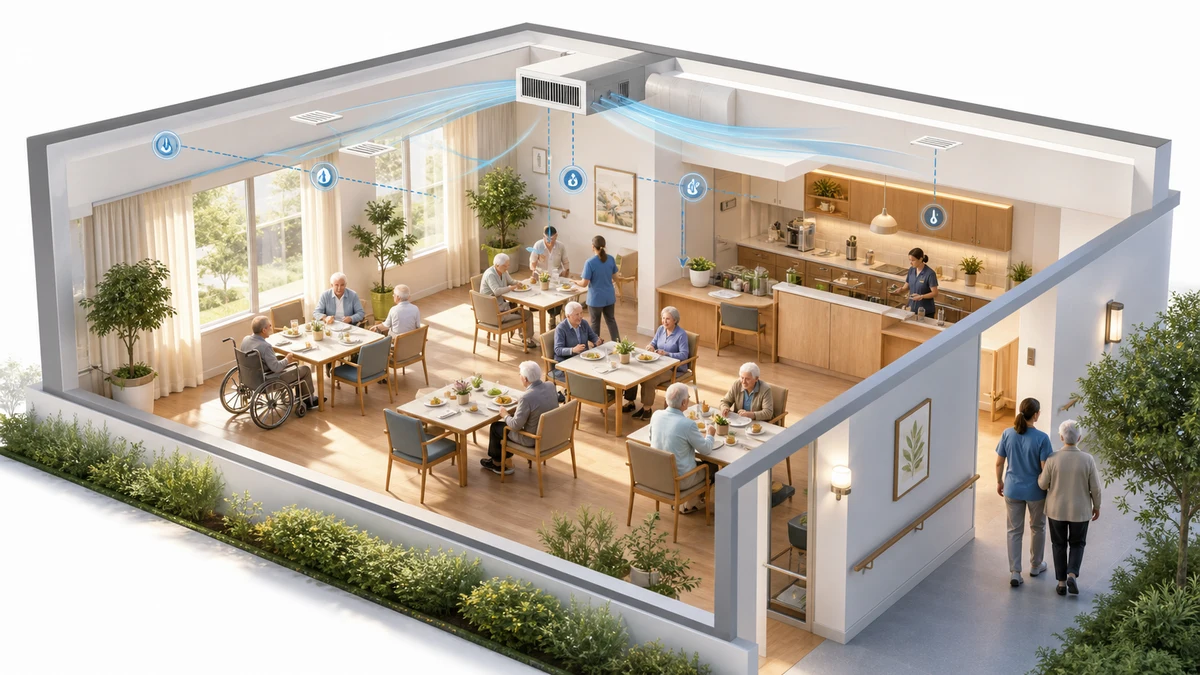
Indoor conditions & ventilation
CO₂, temperature and humidity trends help teams investigate ventilation and comfort in occupied communal areas. Optim EOS retains time-stamped readings, thresholds and alerts so the provider can show what conditions were observed and how exceptions were handled. Where a competent assessment and the existing system permit, these signals may also inform ventilation control.
Kitchen, laundry & plant energy visibility
Circuit data and suitable boiler, pump, valve, AHU and other plant states can separate selected kitchen, laundry, hot-water, HVAC, lift and incoming loads. Trends show when equipment operates and help teams investigate baseload, overrides, faults or schedule drift. Agreed exceptions can be routed to the home's team or competent maintainer, with the response retained for review.
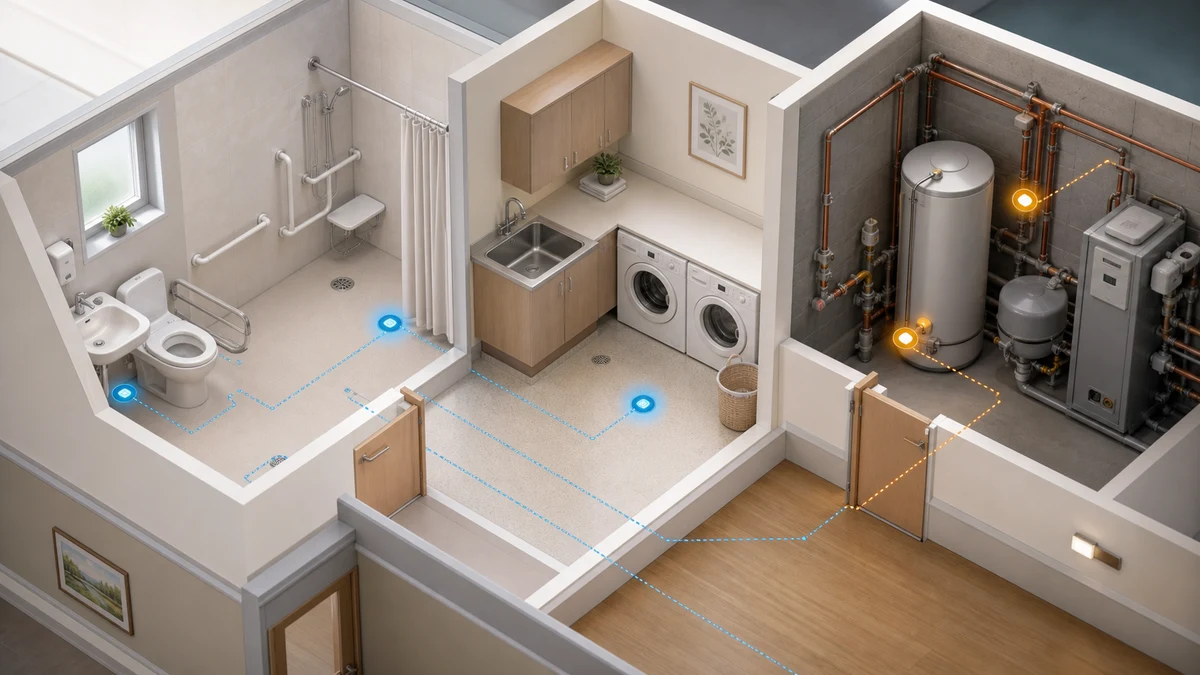
Water-leak alerts & hot-water trends
Leak sensors can alert agreed contacts to water detected in selected plant rooms, kitchens, laundries and other risk areas. Where the water-safety plan and plumbing design support it, fixed sensors can retain selected stored-water and circulation temperature trends. These records strengthen the home's evidence trail alongside its prescribed Legionella checks, flushing, maintenance and corrective actions.
One dashboard: Optim EOS
Optim EOS, the Energy Operating System, is Optim Energy's building-performance platform delivered as a BEMS. It brings readings, plant states, alerts, response history and authorised controls together. A Person in Charge can review comfort and premises evidence, facilities teams and competent maintainers can investigate exceptions, and group operators can compare performance across homes. Configurable exports, escalation and review arrangements are agreed per deployment.
Capital add-ons
When monitoring proves the case for capital
Measured operating evidence can show where a separately designed capital measure deserves assessment.
Heat-pump readiness
Many homes still run on kerosene and natural gas. A sub-metered heating baseline can strengthen the case for moving to air-source heat pumps and size the project on real consumption rather than guesswork. The Support Scheme for Renewable Heat (SSRH) may be relevant where the operator and project meet the current rules.
Existing solar PV monitoring
For homes with existing solar, Optim EOS can bring compatible inverter or meter data into an operational view of generation, self-consumption and export, showing how PV interacts with heating, hot water and laundry. Optim Energy does not currently supply new solar PV systems. A future capital project would require separate specialist design, procurement and confirmation of any current support.
Evidence for operators
Useful sector evidence, applied to each home
Published guidance helps identify relevant questions. Optim Energy then uses the home's own systems, operating patterns and care requirements to define the scope and modelled business case.
Published light-and-heat context
The BDO/Nursing Homes Ireland 2023–24 survey reported average light-and-heat costs of €2,161 per occupied bed among 100 responding homes in 2023. It is sector context, not a forecast for another home.
SEAI reports that Inis Ree Lodge, part of Sonas Nursing Homes, increased its heating zones from about 20 to 90 and added room-level temperature control with central BMS monitoring. SEAI reports heating-energy use falling by about 39 to 40%, from roughly 295,000 kWh of gas a year to 177,000–179,000 kWh, with annual cost savings of about €8,000.
HIQA's assessment framework considers whether ventilation, heating and lighting are suitable for residents within wider premises, governance and infection-prevention arrangements. Time-stamped conditions, alerts and response records help operators prepare for inspection and demonstrate how monitored exceptions were managed.
Older people can be vulnerable to heat as well as cold. HPSC advises care providers to assess overheating risk and monitor indoor temperatures through the day and night. Site controls must follow residents' assessed needs and retain staff authority.
Bills, weather, occupancy, building fabric, plant, operating schedules and care requirements determine the opportunity. Optim Energy establishes a baseline before presenting modelled savings, installed cost, ongoing service cost and payback.
How it works
Our four-step process
1
BMS audit and EOS assessment
We start with the home's priorities, bills, plant, operating patterns and care requirements. Optim Energy carries out the BMS audit and Optim EOS assessment. Where a whole-building professional energy audit must be independent or formally certified, we coordinate the appropriate auditor and check potential support against current rules.
2
Tailored design & business case
The proposed scope sets out useful monitoring points, alerts, compatible controls, safeguards, installed cost and ongoing service. Modelled outcomes follow the home's own baseline rather than a standard sector percentage.
3
Installation around care
The plan is agreed around resident care, access, safeguarding and infection-control requirements. Qualified specialists install and commission meters, controllers and plant interfaces, including fallback and staff override.
4
Continuous monitoring & optimisation
Optim Energy reviews trends, alerts and performance against the baseline, then helps tune or phase the scope. A first site can test the design; each additional home still receives a site review.
Ireland: funding pathways
Where support may fit
Eligibility depends on the operator, building, measure and current programme rules. Optim Energy helps assess potential fit and prepare or coordinate relevant technical inputs; eligibility and approval remain with the scheme authority.
SEAI Support Scheme for Energy Audits (SSEA)
May support an independent professional energy audit where the operator and project meet the current scheme rules. Eligibility is checked before proceeding.
SEAI Technical Assistance Grant
May support eligible SMEs with building-specific technical design work for measures such as BMS controls, renewable heat or energy efficiency. Scope, professional requirements and approval depend on the current rules.
Triple E / Accelerated Capital Allowance (ACA)
Optim Energy includes Triple E and ACA treatment in project planning where relevant. Applicability depends on the qualifying equipment, customer and current SEAI and Revenue rules.
Support Scheme for Renewable Heat (SSRH)
May support eligible renewable-heating projects under the current scheme rules.
SEAI Non-Domestic Microgeneration Grant
May support eligible solar PV projects under the current scheme rules.
SEAI business energy upgrade supports
Relevant BMS, automatic-control, heat-pump, fabric or other routes may apply where the operator, building, measure and contractor meet current programme rules.
SEAI Community Energy Grant / EXEED
Larger or coordinated projects may have a route through current community or EXEED programmes, subject to project structure, eligibility and approval.
If controls, sub-metering or a building management system form part of the scope, read our practical guide to BMS grants in Ireland before ordering equipment or starting work.
Common questions
Nursing homes FAQ
We're a 24/7 home that's never empty, will the install disrupt residents?
The installation plan is agreed around resident care, access and infection-control requirements. Wireless sensing can reduce cabling in suitable areas, while meters, controllers and plant integrations require competent installation and commissioning. Survey findings determine duration, room access, any shutdowns and whether temporary measures are needed.
Does this help us with HIQA?
Yes. Optim EOS can give the Person in Charge and facilities team a time-stamped record of temperature, humidity, ventilation indicators, alerts and responses across monitored areas. That supports premises oversight, inspection preparation and evidence of how exceptions were identified and managed within the home's wider Regulation 17 and infection-prevention arrangements. It complements the provider's policies, risk assessments and professional responsibilities.
GDPR and dignity, do the sensors capture residents?
The selected radar, PIR and Time-of-Flight presence sensors do not capture images, video, audio or personal identifiers. They can report anonymous occupied or vacant status for building-control purposes. Sensor zones and automation rules are agreed with the provider around resident comfort, dignity and care routines, while the provider remains responsible for the lawful purpose, access, retention and wider data-protection arrangements.
Won't automated heating control leave frail residents cold?
Room and zone trends can reveal persistent over- or underheating. Where the existing heating system is compatible, agreed controls may maintain provider-defined comfort limits, schedules and exception rules. Any resident-area automation requires site assessment, fail-safe commissioning and continued staff override.
Does SEAI fund this? Which scheme fits us?
It depends on the operator, proposed measures and current scheme rules. Potential routes can include SEAI support for an independent professional energy audit, Triple E and the Accelerated Capital Allowance, SSRH, building-fabric, solar, community-energy and EXEED supports. We help assess potential fit and prepare or coordinate the relevant technical inputs; eligibility and approval remain with the scheme authority.
Can we start with one home and roll it out across the group?
A first site can test the monitoring design, establish a weather- and activity-aware baseline and show whether the evidence supports further controls or rollout. Each additional home still needs a site review because plant, fabric, resident needs and operating practices vary.
Is this extra work for our care and maintenance staff?
Optim Energy can manage agreed platform monitoring, alerts, optimisation and reviews, while the home retains its clinical, maintenance and response responsibilities. Where the water-safety plan supports it, fixed sensors can complement selected hot-water trends; they do not replace Legionella risk assessment, prescribed outlet checks, TMV controls, flushing, maintenance or record-keeping.
Start with one recurring building problem.
Bring recent bills, a known comfort or plant issue, or an existing audit. Optim Energy will identify the smallest useful next step and coordinate independent professional assessment where it is needed.