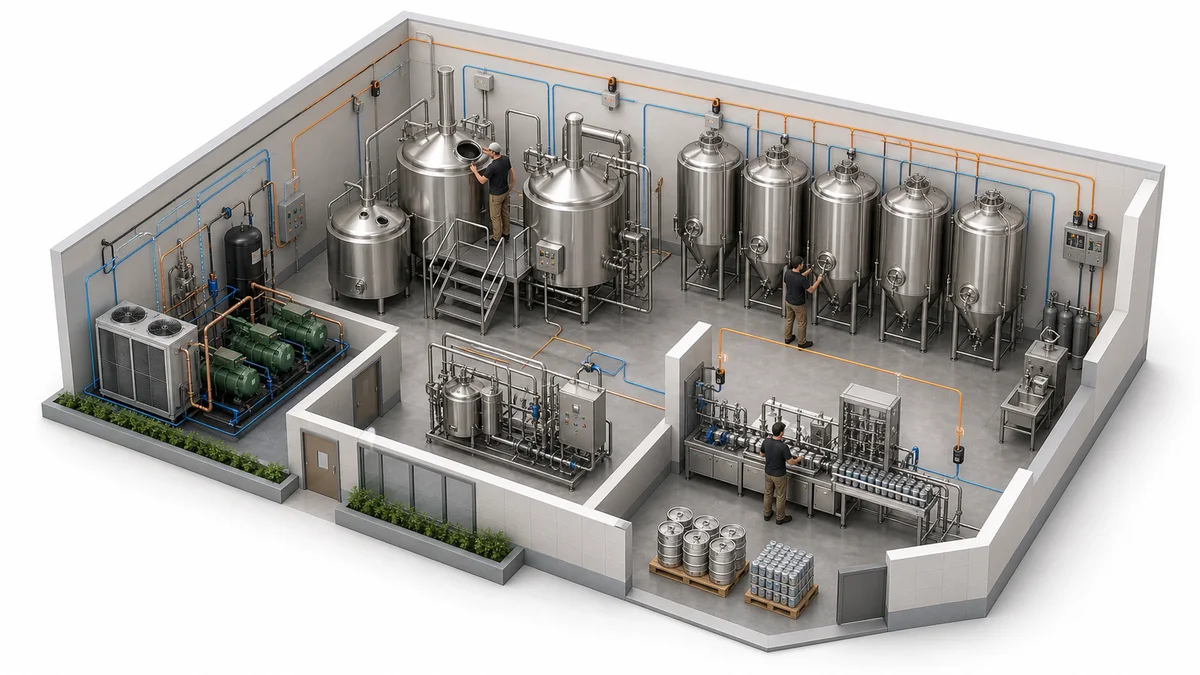
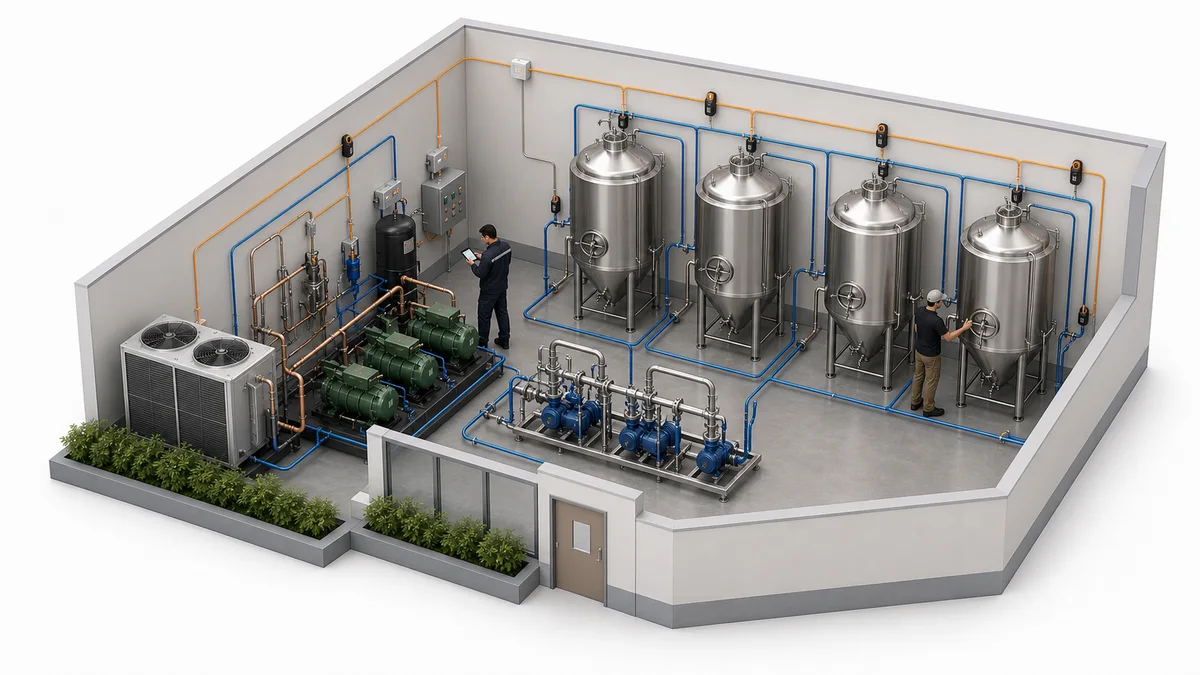
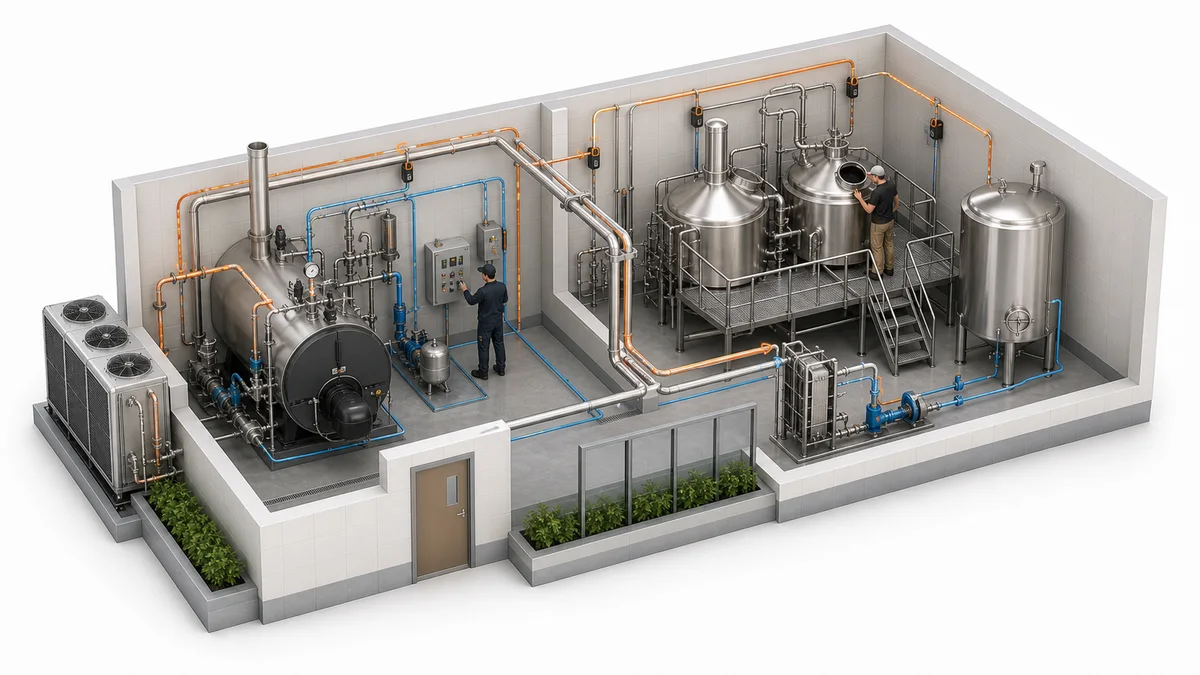
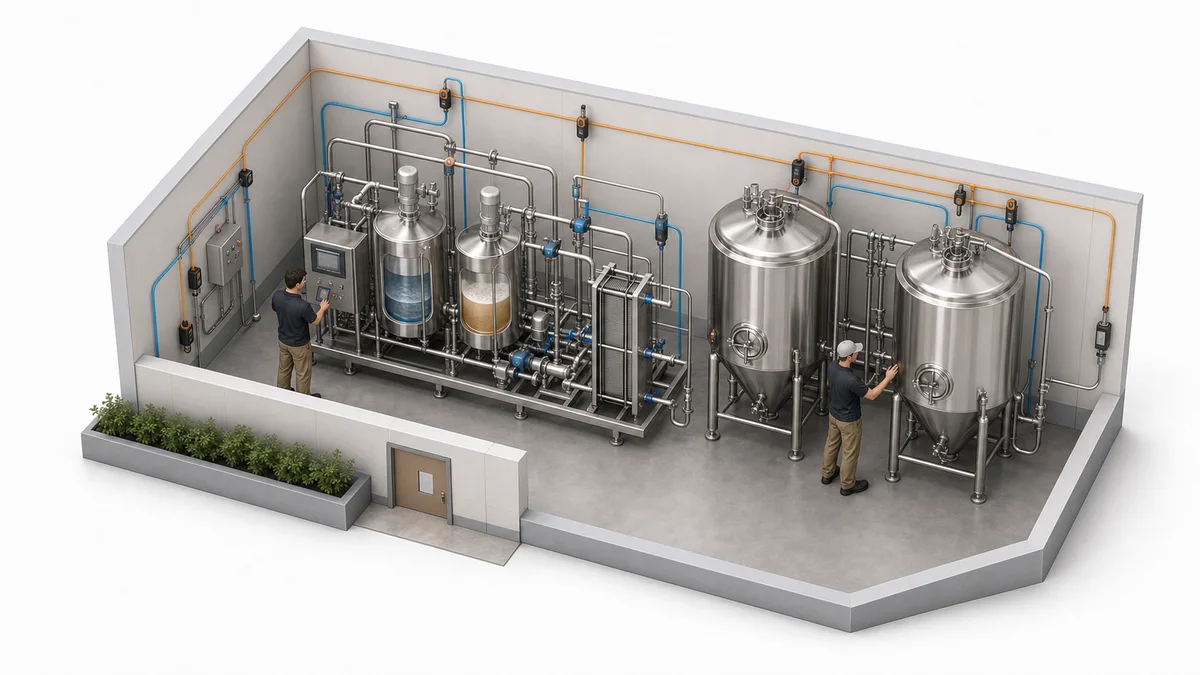
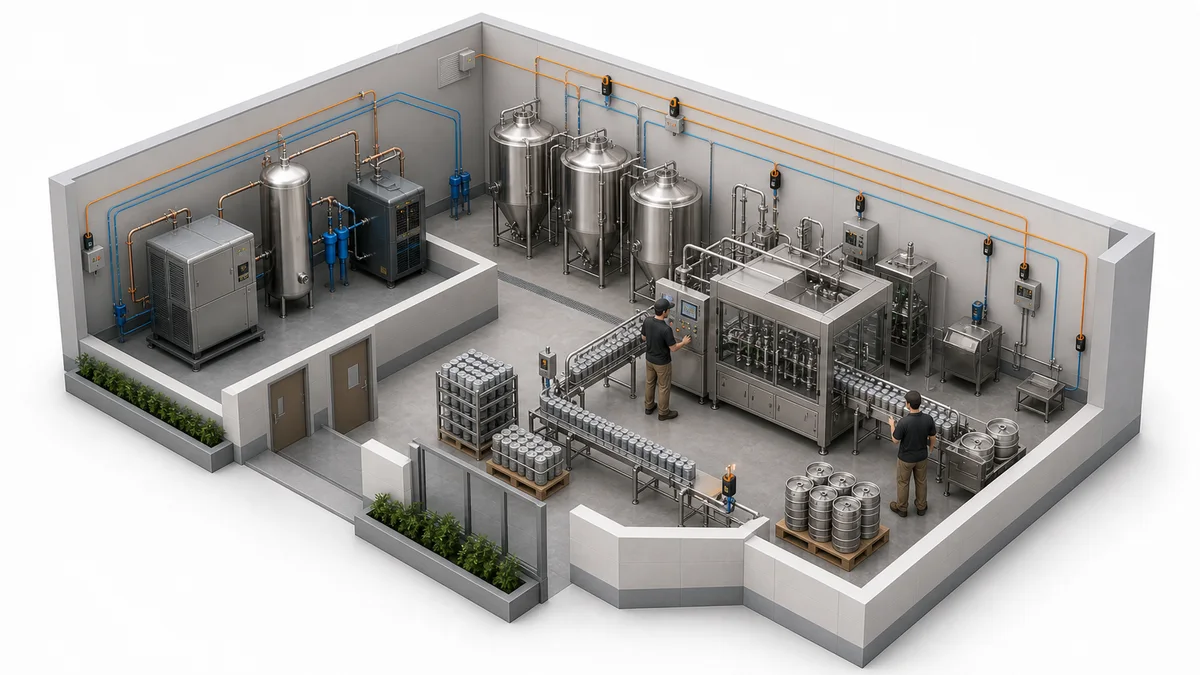
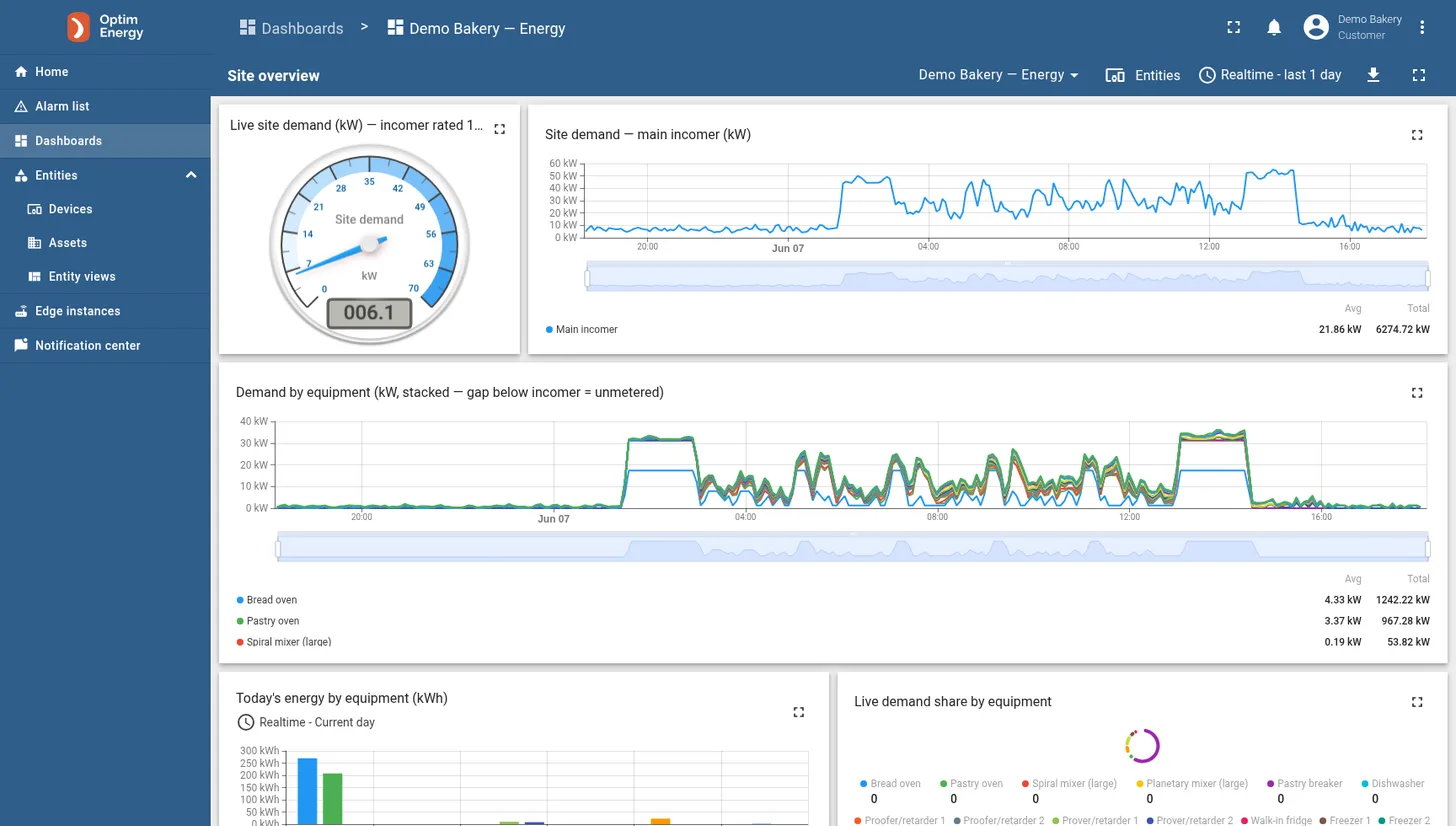
See which utility systems drive cost, what keeps running when production stops and whether an operating change worked. Optim Energy connects brewery energy, water, equipment and production data so owner-operators can improve performance while protecting beer quality, hygiene, safety and production continuity.
Your bills show the total cost, but not which brew, tank, cleaning cycle, cold room or packaging run caused it.
You cannot separate brewhouse, refrigeration, compressed-air and packaging demand.
Chillers, compressors or other utilities run overnight for reasons nobody can confirm.
Boiler fuel or water use is rising, but the affected process is unclear.
Cleaning cycles vary in water, temperature or duration without useful comparison.
Packaging systems consume utilities while output has stopped.
A chiller, boiler or heat-recovery project is being sized without a dependable baseline.
What changes
Know what is normal, what needs attention and whether the response worked.
Give production, engineering and management one operating record while recipe, hygiene and safety-critical systems remain within their approved boundaries.
Understand production cost
Relate measured electricity, thermal energy and water to batches, packaging output and saleable hectolitres.
Find avoidable baseload
See what refrigeration, compressed air, hot-water plant and packaging use outside productive operation.
Invest with evidence
Use actual load and runtime to prioritise maintenance, scope capital work and verify completed changes.
Keep decisions reviewable
Retain agreed exceptions, alerts, response history and exports for operational, audit and environmental review.
Not every brewery needs a full Optim EOS deployment. Optim Energy will recommend a focused BMS audit, monitoring, an independent whole-building audit where formally required, or a simpler action when that is the more proportionate next step.
What a deployment could include
A modular monitoring and control stack
Begin read-only with one recurring utility or production question. Optim EOS is the Energy Operating System, Optim Energy's building-performance platform delivered technically as a BEMS. It is configured around selected evidence, suitable PLC or process-data interfaces, agreed alerts and operating boundaries, then adds compatible controls only when the measured case justifies it.
Utility and process visibility
Selected electricity, fuel, water and equipment-state data can separate the brewhouse, refrigeration plant, compressor, cleaning system, packaging line and cold rooms. Relating those signals to production shows when systems start, produce, idle and stop, creating a measured basis for the next operational or capital decision.
Refrigeration and tank cooling
Where the signals are available, Optim EOS can compare chiller electricity with glycol temperatures, equipment state, tank cooling calls, cold-room conditions and the production schedule. Agreed alerts can surface unusual baseload or recovery. Refrigeration settings, protective logic and plant modifications remain with the approved OEM or specialist.
Steam, hot water and heat balance
Fuel, steam, condensate and hot-water readings can build an energy balance around each brew day. That evidence can support leak and trap investigation, hot-liquor recovery and a correctly scoped capital case. Burner management, pressure protection and combustion control remain outside the Optim EOS operating boundary.
CIP water and cycle evidence
Compare water, temperature, conductivity, pump energy, phase and duration for the same cleaning circuit when suitable instruments are available. Exceptions can direct investigation of drift and approved improvements. The brewery retains responsibility for hygienic design, calibration, cleaning validation, HACCP procedures and corrective action.
Compressed air and packaging
Relate compressor power, air flow and pressure to packaging output, stops and quiet hours. A rising out-of-hours baseline can direct leak investigation, while line electricity, water and air can be compared with good output. Any standby control requires OEM-approved interlocks, delay logic, safe restart and local override.
One operating view: Optim EOS
Optim EOS, the Energy Operating System, is Optim Energy's building-performance platform delivered as a BEMS. It can exchange selected data with suitable existing PLC, process and reporting systems without replacing recipe or safety control. Production teams can focus on exceptions, while operational history, configurable exports and system-to-system access support engineering and management review.
Specialist and capital options
Use the evidence to scope the right engineering work
Optim EOS is the operating evidence layer, not the heat exchanger, chiller or steam system. Measured duty and operating context can help the brewery and its specialists decide whether an engineered upgrade is justified.
Refrigeration plant
Load duration, glycol conditions and tank schedules can support specialist maintenance, pumping, sequencing or replacement assessment.
Steam and heat recovery
A measured fuel, steam, condensate and hot-water balance can support trap work, heat recovery and boiler decisions.
Water and cleaning systems
Cycle and water-balance evidence can support hygienic instrumentation, recovery and approved cleaning improvements.
Refrigeration, steam, pressure, hygienic-process and hazardous-area work requires suitable equipment, competent specialists and the brewery's approved change process.
Questions the data can answer
Turn brewery utility data into operational decisions
Connect production context, equipment state, utility demand and cost so the team can investigate the right problem and check the result.
What drives this brewery's utility cost?
Build a measured load map across refrigeration, brewhouse heat, compressed air, packaging, cleaning, cold storage and non-production periods. The priority depends on this brewery's equipment, schedule and package mix.
Compare production, cleaning, stops, nights and weekends so continuous demand can be separated from avoidable operation before changing a schedule or setpoint.
How much energy and water does useful output require?
Relate electricity, thermal energy and water to packaged or saleable hectolitres, while retaining batch, beer, package, operating-hours and weather context for a fair comparison.
Compare like-for-like tank cooling, wort knock-out, cleaning cycles and packaging stops. Agreed exceptions can prompt investigation without allowing Optim EOS to replace process, recipe or safety controls.
Did the repair or project work?
Compare post-action performance with an agreed, production-normalised baseline and retain the result. Named external brewery projects show why measurement matters, but their outcomes are not forecasts for another site.
Use the brewery's bills, tariff, production, equipment, operating conditions, project cost, ongoing service cost and measured baseline. Savings and payback are site-specific and follow implemented action, not sensor installation alone.
How it works
Our four-step process
1
BMS audit and EOS assessment
We begin with recent bills, production volumes, schedules, equipment, tariff and the recurring question the brewery needs to resolve. Optim Energy carries out the BMS audit and Optim EOS assessment. An independent whole-building audit is coordinated where formally required, while refrigeration, steam, food-safety and hazardous-area assessments remain with the relevant competent specialists.
2
Tailored design and business case
The proposed scope defines useful meters and conditions, production context, integrations, alerts, operating boundaries, installed cost, ongoing service and success measures. Modelled outcomes follow the brewery's own evidence and baseline.
3
Qualified installation and commissioning
Competent specialists coordinate electrical, utility and hygienic instrumentation around production and cleaning. Required isolation, calibration, data-quality checks, safeguards, safe fallback and local override are agreed before commissioning.
4
Continuous monitoring and optimisation
Optim Energy reviews utility demand against batches, tanks, cleaning, packaging and quiet hours, investigates drift and verifies approved changes. The measured result determines whether to retain, adjust or expand the approach.
Ireland: funding and audit routes
Review the relevant support before work begins
The suitable route depends on the applicant, site, evidence and proposed measure. Optim Energy can help assess potential fit and coordinate technical inputs. Eligibility, approval and payment remain with the responsible authority.
Understand and plan
Eligible SMEs may qualify for SEAI's €2,000 professional energy-audit voucher, subject to current applicant, site, energy-spend and registered-auditor rules. A qualifying LEO Energy Efficiency Grant may follow an accepted Green for Business, GreenStart or SEAI audit recommendation.
Monitoring and compatible controls
SEAI lists support for eligible new or upgraded building management systems and a separate optimisation route for qualifying existing systems. A brewery process-monitoring scope is not automatically a qualifying BMS project, so system, contractor and approval requirements must be confirmed before work starts.
Engineered capital measures
A larger refrigeration, steam, heat-recovery or decarbonisation project may warrant an EXEED review. Eligible equipment may also qualify for Accelerated Capital Allowance tax treatment. Neither route is automatic, and Optim Energy distinguishes supporting evidence from authority approval and specialist design.
The scope is planned around brewing, packaging and cleaning. Many electrical and non-invasive sensors can be installed during agreed windows, while in-line water, steam or hygienic instruments may require a planned isolation or shutdown. The installation, calibration and fallback requirements are agreed before work begins.
Does Optim EOS control the brewing process?
Optim EOS does not need to replace the brewhouse PLC, recipe system or safety controls. A brewery can begin with read-only metering, sensing, integration and alerts. Suitable supervisory controls can be considered later where the equipment, manufacturer requirements and operating safeguards allow, with local override and safe fallback.
Can EOS show the energy cost of each beer?
It can allocate measured utilities to batches, tanks, packaging runs and production periods when the required production context is available. Results can be normalised by brewed, packaged or saleable hectolitres and segmented by product or package, using an allocation method agreed with the brewery.
Can monitoring reduce our refrigeration cost?
Monitoring can relate compressor demand to glycol temperatures, tank cooling calls, cold-room conditions and the production schedule. That evidence can direct maintenance, setpoint review, pumping, scheduling or capital investigation. The brewery's own baseline and approved actions determine the opportunity.
Can it help with CIP and food safety?
Suitable signals can retain time-stamped water, temperature, conductivity, flow and cycle information for review. Optim EOS provides supporting operational evidence. The brewery remains responsible for validated cleaning recipes, hygienic design, calibration, HACCP procedures and corrective action.
Can it identify compressed-air leaks?
Flow, pressure and compressor-power data can establish production and quiet-hours baselines. A rising out-of-hours flow can direct investigation and show whether repairs persist. Locating individual leaks may still require an ultrasonic survey, and the brewery remains responsible for its compressed-air quality programme.
Can it support energy audits or environmental reporting?
Optim EOS can retain and export time-stamped energy, water, production and response data for internal review. It does not certify ISO 50001, establish best available techniques compliance, fulfil a licence condition or replace the brewery's auditor and responsible professionals.
What size brewery is suitable?
Suitability depends more on the recurring problem, utility spend and available evidence than production volume alone. A microbrewery may begin with one compressor, cold room or water issue. A craft or regional brewery may justify a wider utility and production-normalised view.
What savings should we expect?
Savings depend on the brewery's equipment, schedule, product and package mix, tariff and the actions implemented. We establish a site-specific baseline before modelling savings or payback. A useful first phase may also show that a suspected opportunity is not available and prevent unnecessary capital spend.
Start with one recurring brewery problem.
Bring recent utility bills, production volumes, operating schedules or an issue you cannot explain. Optim Energy will identify the smallest useful next step.