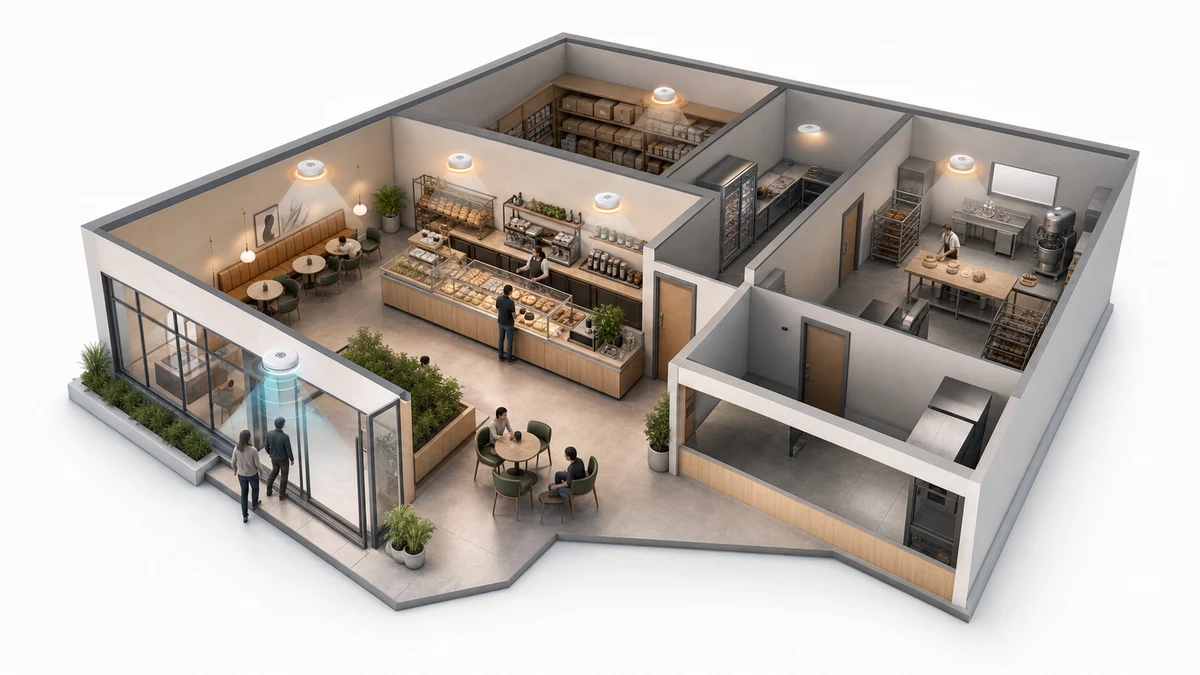
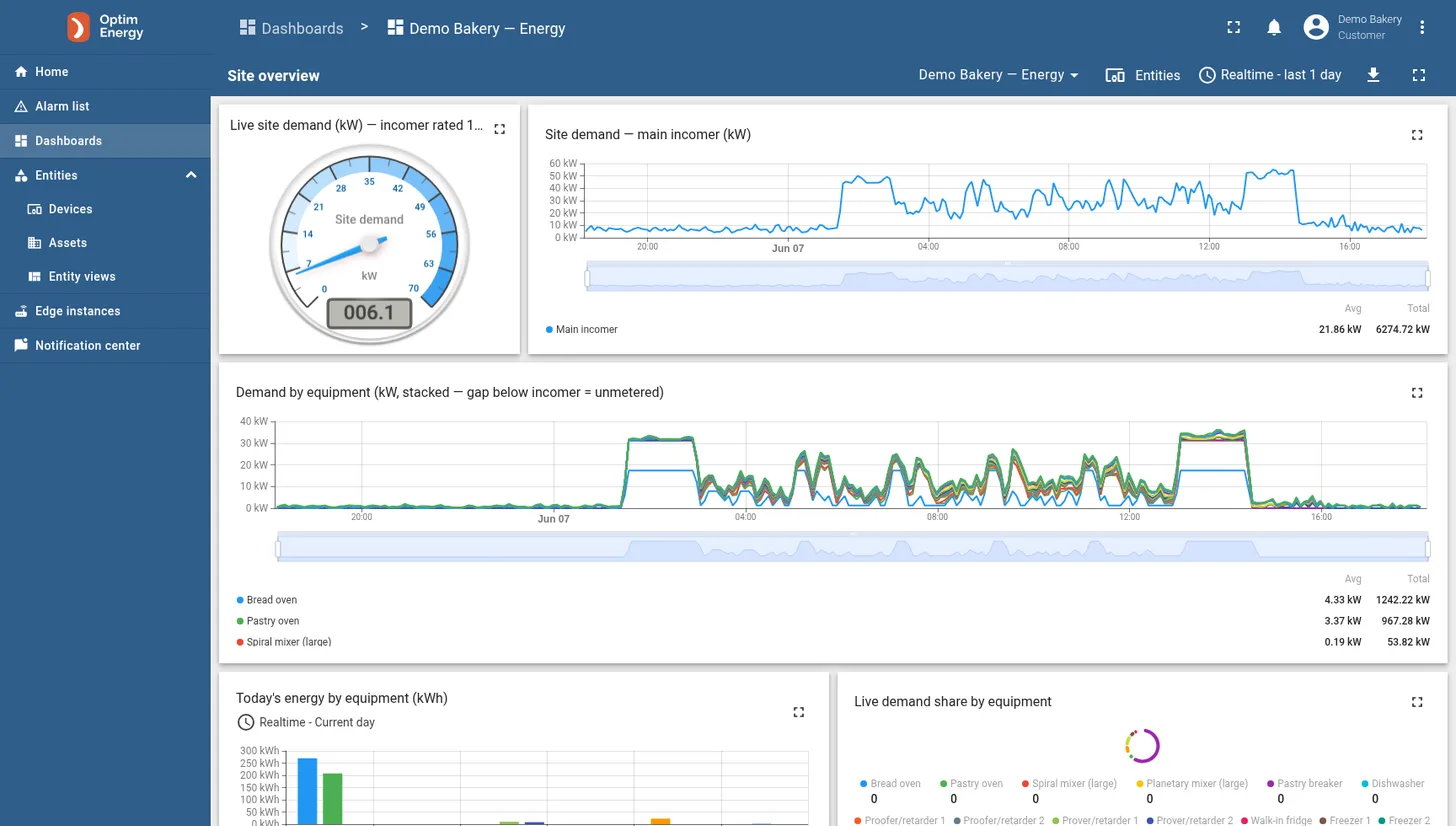
See which equipment drives cost, what runs unnecessarily and whether an operating change actually worked. Optim Energy connects bakery energy, equipment and condition data so owners can act without losing sight of production, product quality or food-safety responsibilities.
A recurring cost, equipment or production problem can be difficult to investigate when the monthly bill shows only the total energy used.
You cannot tell which equipment is driving the energy bill.
Ovens or proofers may be starting earlier or running longer than production requires.
Overnight energy use is higher than expected, but the cause is unclear.
Refrigeration or room conditions keep drifting and the cause is difficult to trace.
You are considering new controls or equipment, but lack a baseline for the decision.
Different bakery sites cannot be compared fairly using monthly bills alone.
What changes
Run production with clearer control of energy, conditions and investment.
The owner and production team can make decisions from a clearer shared record, without losing sight of product quality, food-safety procedures or the practical demands of trading.
Know the cost of production
See which equipment, operating periods and patterns are driving demand, rather than relying on one monthly total.
Protect product and trading
Make equipment and operating decisions with relevant temperature, condition and cold-chain evidence to hand.
Invest with confidence
Use a bakery-specific baseline to prioritise maintenance, controls or capital work and assess whether a change holds over time.
Not every bakery needs a full Optim EOS deployment. Optim Energy will recommend a focused BMS audit, monitoring, an independent whole-building audit where formally required, or a simpler action when that is the more proportionate next step.
What a deployment could include
A modular monitoring and control stack
Optim EOS is the Energy Operating System, Optim Energy's building-performance platform delivered technically as a BEMS. It can bring selected energy and utility readings, equipment and process conditions, production context, alerts and compatible controls into one view. The bakery can begin with one problem and add further areas only when the evidence justifies it.
Oven & process sub-metering
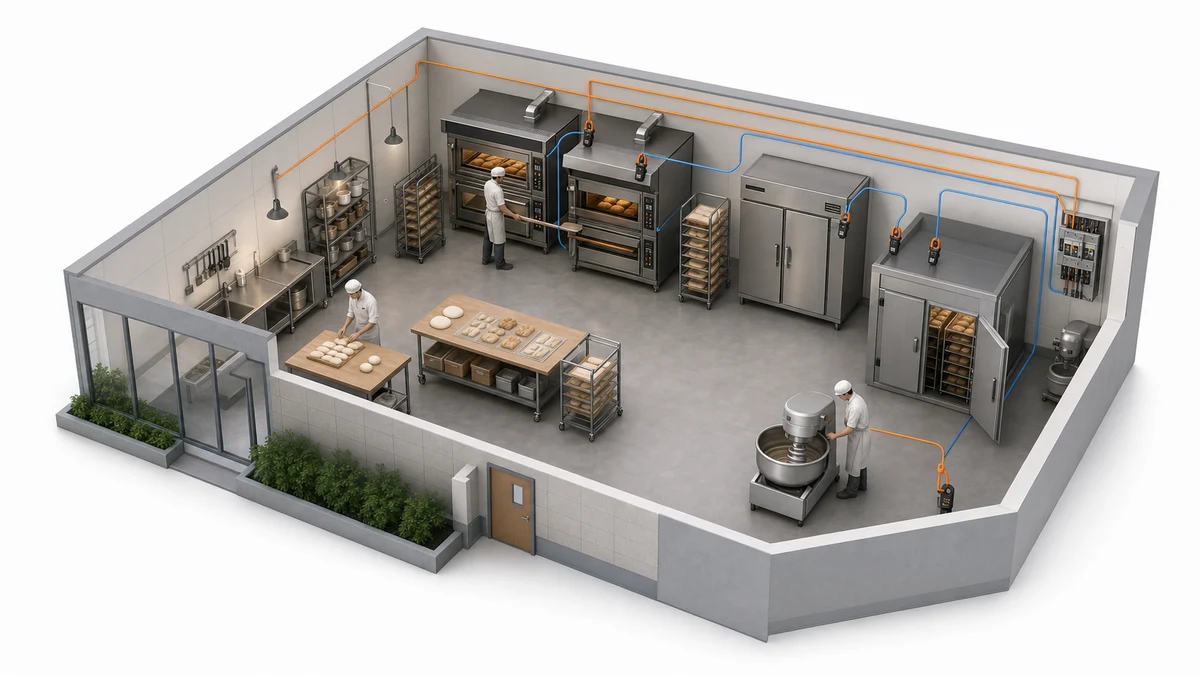
Selected electricity, fuel, water or steam data can map ovens, proofer-retarders, mixers, refrigeration, cleaning and the incoming supplies where those utilities matter. Equipment state and production context show when major loads preheat, produce and idle. Normalising the result against saleable production helps separate real improvement from a change in volume or product mix.
Oven optimisation & chamber sensing
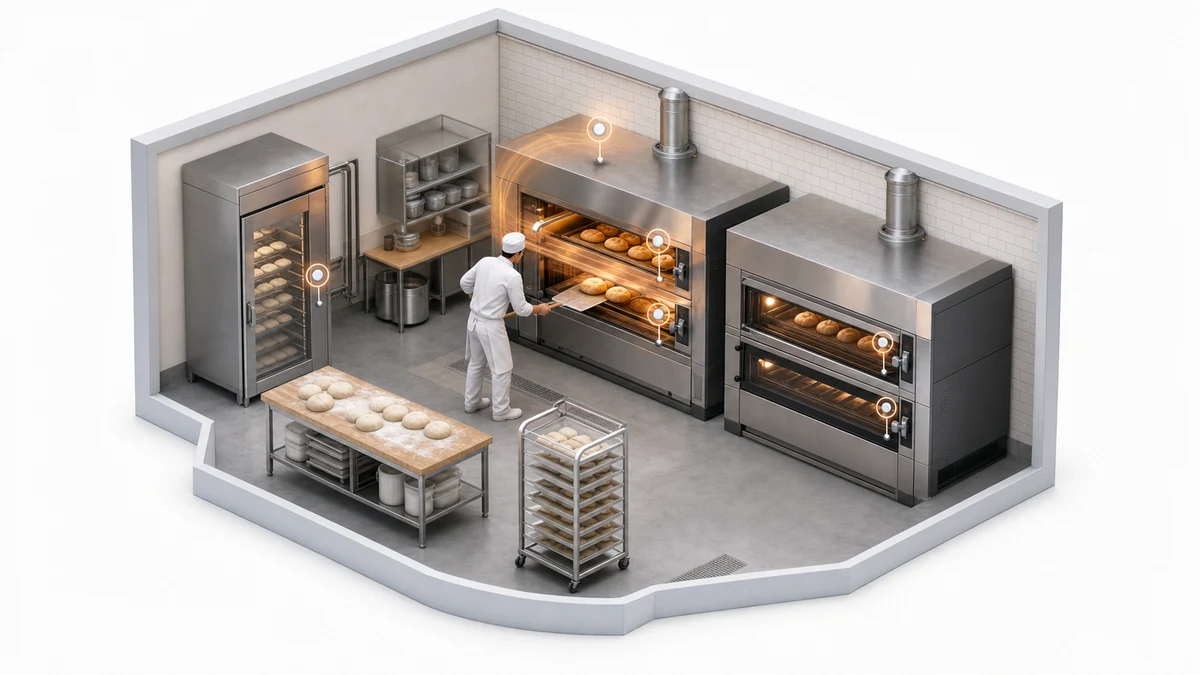
Suitable temperature, humidity, door, equipment-state and energy data can build a clearer picture of proofing, preheat, baking and idle periods. The bakery can then test scheduling, loading, maintenance and manufacturer-approved standby changes against product quality and recovery time. Optim Energy measures the result against the baseline before recommending wider rollout.
Refrigeration & cold-chain records
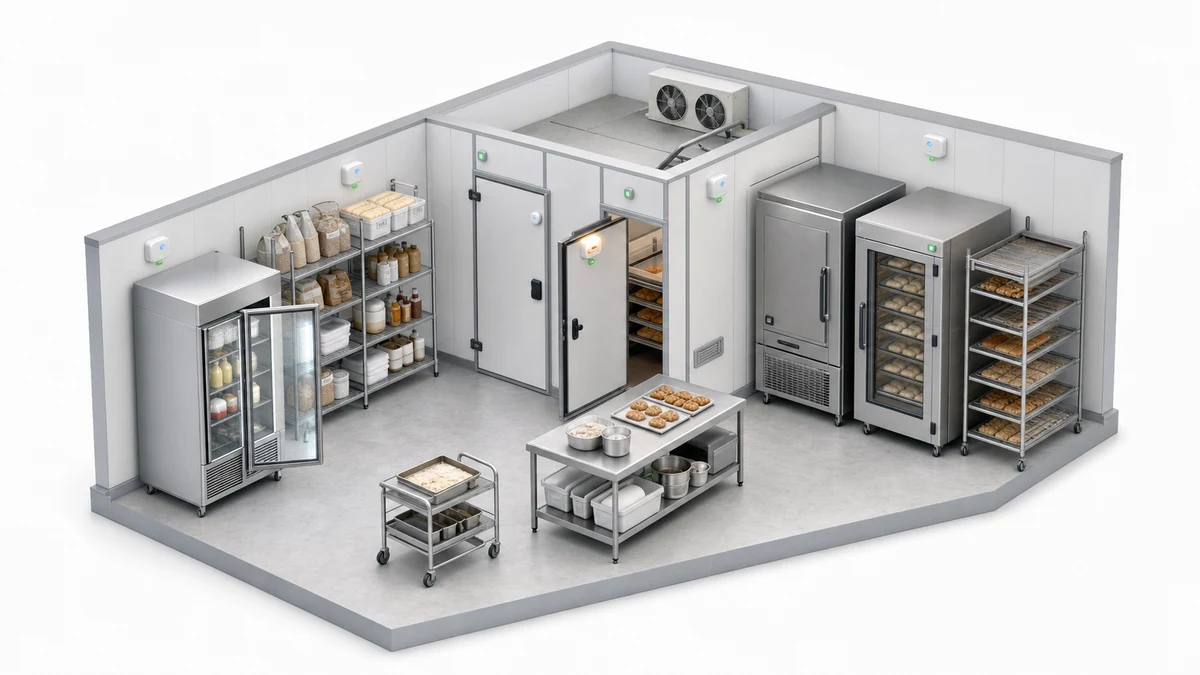
Refrigeration can run continuously and be affected by ambient heat, door use, setpoints and maintenance. Temperature, door and power data can reveal drift, unusual cycling and extended door-open events. Validated sensing can retain agreed thresholds, alerts and response history for review within the bakery's HACCP workflow.
Automated control & climate setback
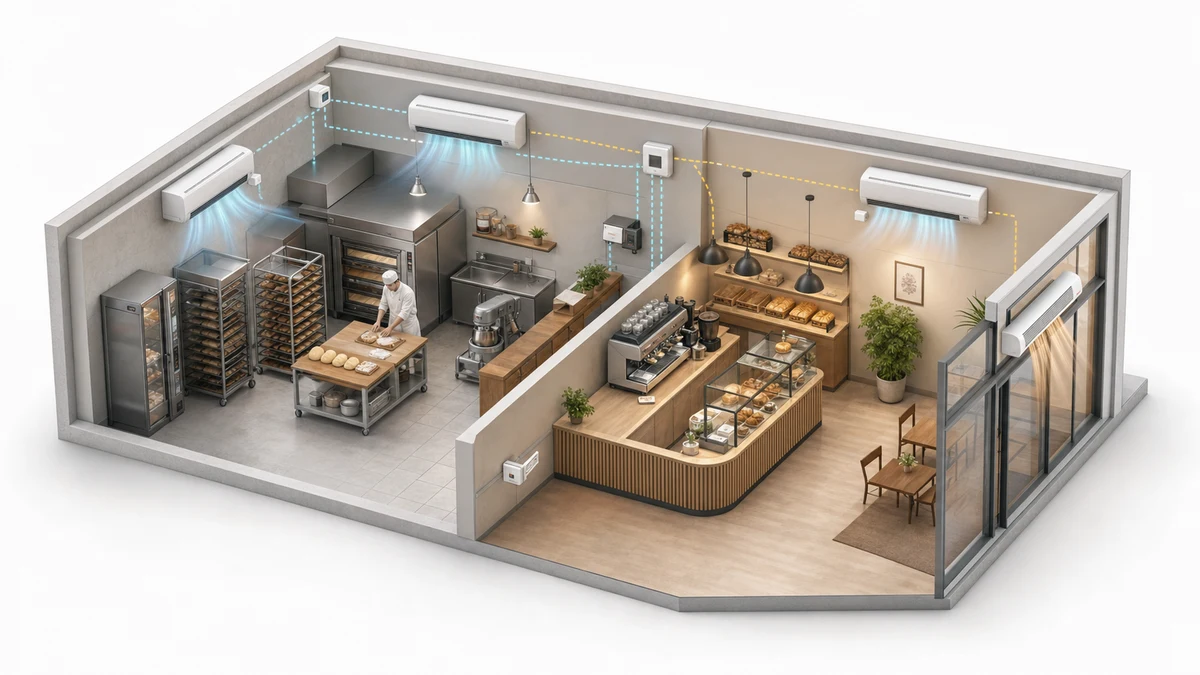
Where the equipment and operating process allow it, relays, contactors and controller integrations can automate selected shutdowns, setbacks and start times. That might include lighting, an air curtain, café equipment or climate plant. Every control is designed around safe operation, product requirements and manual override, then tuned using measured performance.
Lighting, occupancy & footfall
Occupancy and daylight controls can reduce avoidable lighting in storage, corridors and back-of-house areas. For bakeries with a café, anonymous counting can help compare opening-hours demand with actual footfall. Sensor choice follows the least-intrusive approach suitable for the question; camera-free options are available where privacy is a priority.
One dashboard: Optim EOS
Optim EOS, the Energy Operating System, is Optim Energy's building-performance platform delivered as a BEMS. It gives production teams operational status, agreed alerts and response history, while owners can review energy, utility, cost and production-normalised trends. Configurable exports can support food-safety, maintenance and management reviews, with service and review cadence agreed for the deployment.
Specialist and capital options
Use measured duty and conditions to scope the right engineering work
Optim EOS provides operating evidence. It is not the oven, refrigeration plant, heat-recovery system or production control. Where the data supports a larger change, Optim Energy coordinates the evidence and the bakery uses competent specialists for design, food-safety review and equipment modification.
Ovens and proofing
Temperature, humidity, loading, runtime and production context can support OEM-led maintenance, control review or replacement assessment.
Refrigeration and heat recovery
Measured cooling duty, conditions and simultaneous heat demand can support a specialist case for plant improvement or heat recovery.
Utilities and generation
Fuel, steam, water and daytime electricity evidence can inform separately engineered utility or solar work. Optim Energy does not currently supply new solar PV systems.
Questions the data can answer
Turn bakery data into practical decisions
Connect production, equipment conditions, energy and cost so the team can decide what to change and check the result.
Build the load map
Whole-site and circuit data identify how ovens and process heat, proofing, refrigeration, ventilation, lighting and café equipment contribute at this bakery. Fuel, equipment, product mix and trading model determine the priority.
Circuit data can distinguish warm-up, productive baking and idle periods. Used with the production schedule, product quality and manufacturer requirements, it gives the owner evidence to test start time, loading, maintenance and approved standby settings.
Track energy against a production measure that fits the operation, such as kWh per kilogram or tonne, alongside product mix, production hours and rejects. That separates genuine efficiency change from a busier or quieter period.
Validated time-stamped conditions, threshold exceptions and response history can support the bakery's HACCP workflow and inspection preparation for relevant refrigeration equipment.
Interval data distinguishes energy reduction from cost shifting and provides evidence for suitable solar or other engineered options. Any case still depends on tariff, production, roof or plant constraints and specialist assessment.
Build the bakery-specific business case
Bills, interval and circuit data, production schedules, equipment, tariff, project and service costs, confirmed support and a measured baseline determine the proposed scope, savings and payback.
How it works
Our four-step process
1
BMS audit and EOS assessment
We start with bills, production schedules, equipment, tariff and known problems. Optim Energy carries out the BMS audit and Optim EOS assessment. Where a whole-building professional energy audit must be independent or formally certified, we coordinate the appropriate auditor. Food-safety and other specialist assessments remain with the relevant competent specialists.
2
Tailored design & business case
The proposed scope defines useful circuits and conditions, alerts, compatible controls, production safeguards, installed cost and ongoing service. Modelled outcomes follow the bakery's own baseline.
3
Installation around production
Qualified specialists plan metering, sensing and control work around production, cleaning and trading. Electrical isolations, equipment interfaces, fallback and manual override are agreed before commissioning.
4
Continuous monitoring & optimisation
Optim Energy reviews production and idle patterns, investigates drift, tunes suitable controls and verifies agreed changes. The evidence then supports the next operational or capital decision.
Ireland: funding pathways
Three routes to review before work begins
The relevant route depends on the business, evidence and proposed measures. Optim Energy helps assess potential fit and coordinate technical inputs. Eligibility, approval and payment remain with the relevant authority.
Understand and plan
Eligible SMEs may be able to use SEAI support towards an independent professional energy audit. Where a bakery already has a qualifying BMS, the separate BMS Optimisation Grant may support a specialist review. Both routes depend on current applicant, site and scheme rules.
Implement monitoring and controls
Potential routes can include the Local Enterprise Office Energy Efficiency Grant, SEAI support for an eligible new or upgraded BMS, and Triple E or Accelerated Capital Allowance treatment for qualifying equipment. Each route has its own assessment, supplier, expenditure and approval requirements.
Larger capital projects
Solar PV, heat recovery or a wider bakery upgrade may warrant review under current SEAI business supports. A significant project may also warrant an EXEED feasibility and eligibility review where it follows the required certified design approach. Support is not assumed for any individual measure.
If controls, sub-metering or a building management system form part of the scope, read our practical guide to BMS grants in Ireland before ordering equipment or starting work.
Common questions
Bakeries FAQ
Will installing this disrupt production?
We design the work to minimise disruption. Many room sensors can be fitted without structural work, while electrical metering and controls are installed by appropriately qualified contractors during an agreed window and may require a planned isolation. We scope that around production and trading hours before work starts.
Our ovens are the big cost. What can monitoring actually change?
Ovens can be one of a bakery's largest energy loads, but their contribution depends on the oven, fuel, production schedule and product mix. Sub-metering can show when each oven preheats, bakes and idles, creating an evidence base for scheduling, loading, maintenance and manufacturer-approved standby settings. We establish the site's own baseline first, then quantify any proposed change rather than assuming a standard saving.
Can we really save money by baking at night?
It can reduce cost where your tariff has meaningful time-of-use differences and the production plan allows it. We check the actual tariff bands, interval data, process constraints and food-quality requirements before recommending any load shift. Moving demand changes when energy is bought; it does not by itself reduce energy use.
We leave the air conditioning on overnight because turning it off makes the next day worse. Can that be fixed?
Monitoring temperature, humidity and interval energy can show how the bakery and climate plant behave overnight and before production. Where the plant is compatible, Optim Energy can assess a setback or optimal-start strategy, commission safe limits and retain manual override. The measured response determines whether the approach can meet dough, production and staff-comfort requirements without operating longer than the site needs.
Does this help with food safety and HACCP?
Yes. For selected fridges, freezers, cold rooms and proofer-retarders, validated sensing can provide time-stamped condition records, alerts against your agreed limits and a history of how exceptions were handled. That makes trends and overnight events easier to review and can support inspection preparation. Optim EOS organises supporting records and alerts; the bakery remains responsible for its HACCP plan, suitable food-temperature checks, calibration, limits and corrective actions.
Does SEAI fund this? Which scheme fits a bakery?
It depends on the business, proposed measures and current scheme rules. Potential routes can include SEAI support for an independent professional energy audit, the LEO Energy Efficiency Grant, SEAI business upgrade supports, Triple E and the Accelerated Capital Allowance, and solar supports. We help assess potential fit and prepare or coordinate the relevant technical inputs; eligibility and approval remain with the scheme authority.
Is this extra work for our bakers?
The aim is to reduce routine effort, not create another system for bakers to manage. The agreed deployment can automate suitable shutdowns, alerts and reporting, while Optim Energy provides continuous monitoring, performance tuning and reviews. Some food-safety checks and operational decisions will still remain with the bakery team.
Start with one recurring bakery problem.
Bring recent bills, production schedules or an issue you cannot explain. Optim Energy will identify the smallest useful next step.