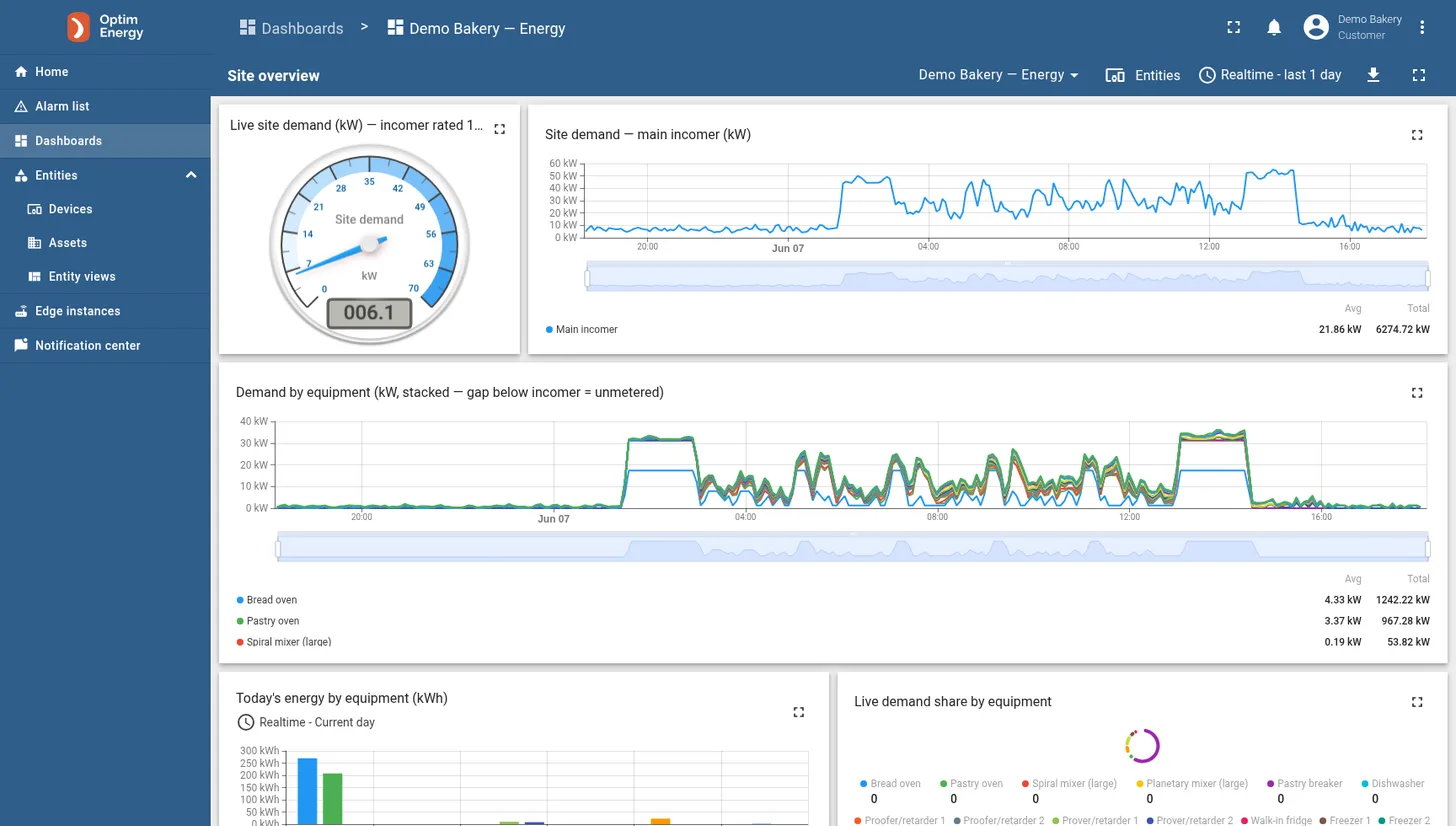
See which equipment drives cost, what runs outside trading needs and when refrigeration needs attention. Optim Energy connects store energy, equipment and condition data so owners can act while protecting stock, food-safety procedures and day-to-day trading.
A monthly bill cannot show which equipment or operating period needs attention. Refrigeration can account for 40% or more of energy use in some grocery formats, but your store's data establishes its actual share.
You cannot tell which equipment drives the energy bill.
Overnight refrigeration or other demand is hard to explain.
Cold-chain exceptions are difficult to investigate across shifts.
Equipment may run outside trading needs.
You need evidence before changing controls or investing in equipment.
What changes
Know what is normal, what needs attention and whether the response worked.
The store team and refrigeration contractor can work from a clearer shared record without replacing the retailer's food-safety responsibilities.
See normal operation
Understand how energy, refrigeration and trading patterns relate across each store.
Act on exceptions
Give store teams and competent contractors a shared record of what happened and what needs investigation.
Keep improvement visible
Compare sites, retain responses and verify whether maintenance or an approved change continues to work.
A small store with limited refrigeration or low energy use may not need a full Optim EOS deployment. Optim Energy will recommend focused monitoring, an independent assessment or a simpler action when that is the more proportionate next step.
What a deployment could include
A modular monitoring and control stack
Optim EOS is the Energy Operating System, Optim Energy's building-performance platform delivered technically as a BEMS. It can bring selected energy readings, refrigeration-controller and equipment states, cold-chain conditions, alerts and compatible controls into one view. A store can begin with one recurring question, then add sites or capabilities only when the evidence justifies it.
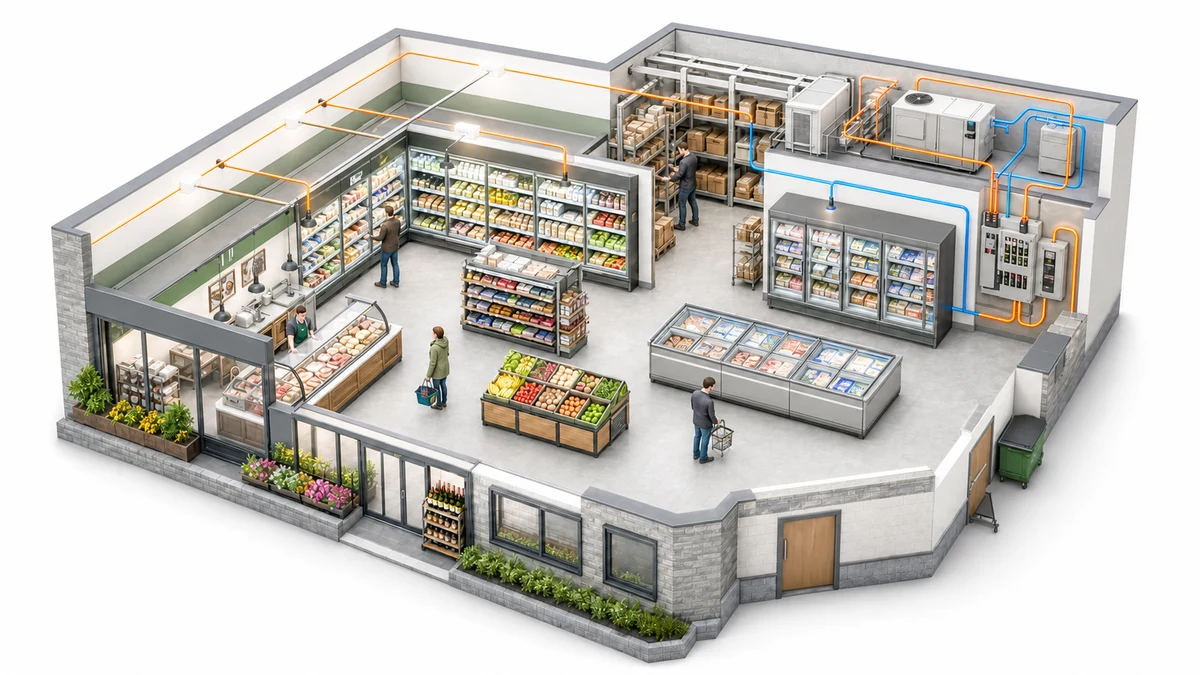
Store-to-circuit energy visibility
Bring incoming energy and useful circuits into a consistent hierarchy across refrigeration, lighting, HVAC, deli or bakery and other significant loads. Optim EOS can expose out-of-hours demand and unusual operating patterns. The store's baseline determines where investigation is worthwhile; monitoring itself is not a guaranteed saving.
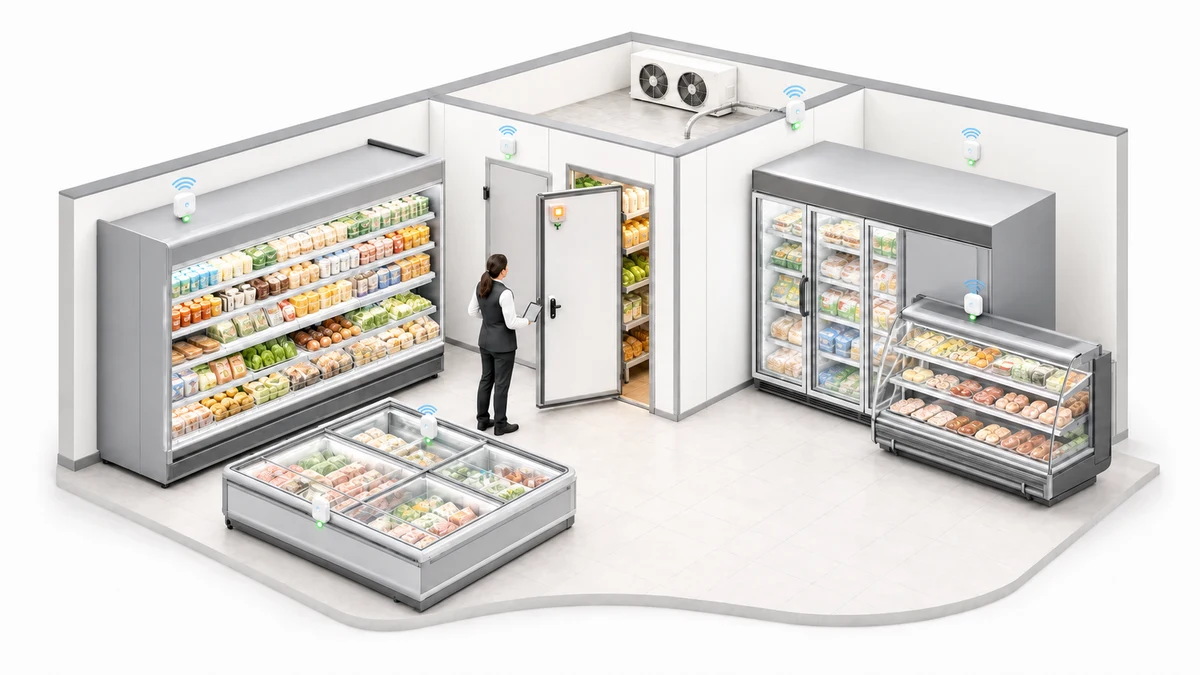
Cold-chain monitoring & HACCP-supporting records
Continuous air or probe-temperature data and door-state evidence can strengthen visibility across selected chillers, freezers and cold rooms. Limits, sensor placement, calibration, verification, corrective actions and any manual product checks remain part of the retailer's HACCP plan. Alerts support earlier investigation; they do not guarantee compliance or prevent spoilage.
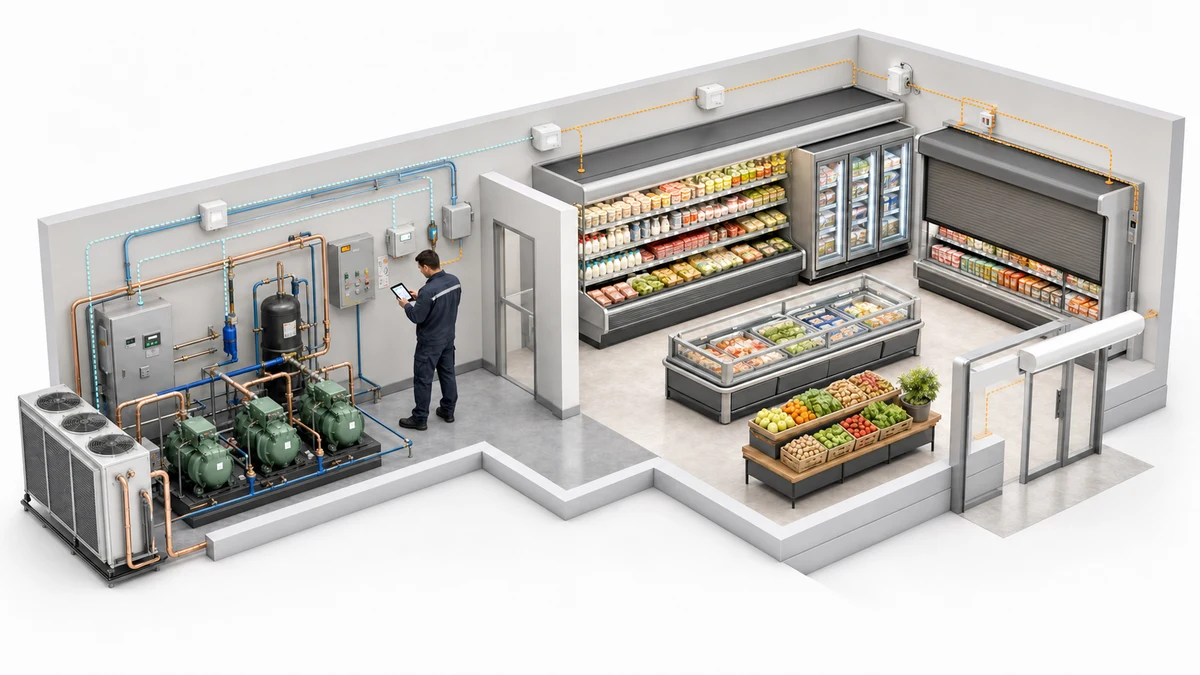
Refrigeration optimisation & control
Where compatible, Optim EOS can read selected refrigeration-controller alarms and equipment states so cabinet, compressor, defrost and door events can be investigated together. A refrigeration specialist can assess floating head pressure, demand-led defrost and other changes within OEM limits, food-temperature requirements, commissioning and fallback behaviour.
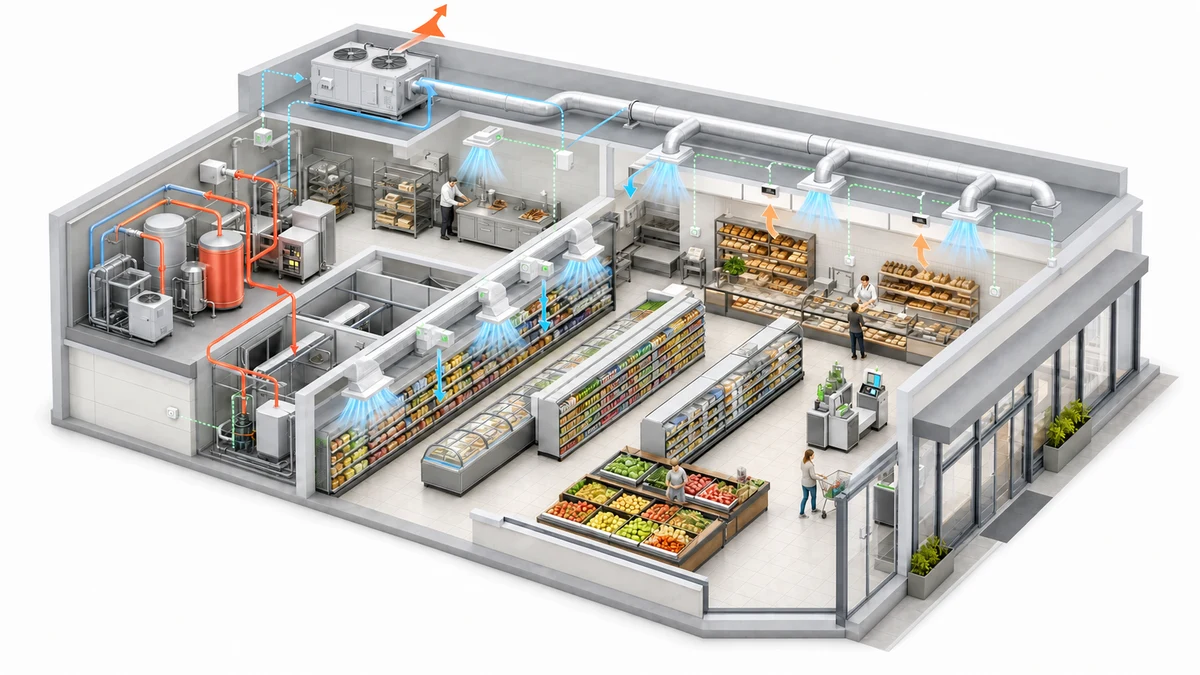
HVAC & demand-controlled ventilation
Where existing systems and ventilation requirements allow, temperature, humidity, CO₂ and schedules can inform HVAC control around trading and actual conditions. Minimum outside air, deli extract, pressure balance, comfort and overrides remain protected. Refrigeration heat recovery is a separate engineered option requiring useful simultaneous heat demand.
Lighting, occupancy & footfall
Align suitable stockrooms, staff areas and frontage zones with presence and daylight rather than blanket schedules. Anonymous, camera-free counting can help compare opening-hours demand with footfall. Sensor choice follows the least-intrusive adequate approach, while safe light levels, local override and the existing lighting infrastructure shape the design.
One dashboard: Optim EOS
Optim EOS, the Energy Operating System, is Optim Energy's building-performance platform delivered as a BEMS. It brings readings, controller states, alerts, response history and authorised controls together. Store teams and refrigeration contractors can share exception evidence, while group operators compare recurring patterns across sites. Exports, access and review cadence are agreed for the deployment.
Specialist and capital options
Keep monitoring separate from refrigeration engineering
Optim EOS can organise the operating evidence and share exceptions with the competent refrigeration contractor. Changes to refrigerant systems, food-temperature controls, cabinets or heat recovery require separate specialist assessment, design and commissioning.
Plant and controls
Controller state, load, temperatures and runtime can support specialist maintenance, sequencing, setpoint or replacement assessment.
Cabinets and store measures
Evidence can help assess doors, night blinds, anti-sweat control or lighting changes against product temperature and trading requirements.
Heat recovery and generation
Measured refrigeration duty and simultaneous heat demand can inform heat-recovery work. Daytime load can inform separate solar assessment, but Optim Energy does not currently supply new solar PV systems.
Questions the data can answer
Turn store data into practical decisions
Use the store's own equipment, operating patterns and baseline to decide what to investigate, change and verify.
Refrigeration is a major load
ENERGY STAR says refrigeration may use up to 40% of a grocery property's total energy, while US DOE material says it often accounts for over half in some supermarket and convenience formats. The actual share depends on store format and denominator.
Circuit, cabinet and plant trends can show when equipment runs, cycles or drifts from its normal pattern. That evidence helps teams prioritise investigation and verify the effect of maintenance, operating or control changes; monitoring alone is not a saving.
Suitable refrigeration controls can respond to conditions
Floating head pressure, demand-led defrost and anti-sweat-heater control are recognised measures. Their suitability depends on the refrigeration system, controller interfaces and safe operating limits, with specialist design and commissioning.
Time-stamped air or probe-temperature records and configured alerts can strengthen cold-chain visibility. Sensor placement, calibration, product checks, corrective action and verification remain defined by the food business operator's HACCP-based plan.
Eurostat reported that Ireland had the EU's highest average non-household electricity price in the second half of 2025 for customers using 500–2,000 MWh annually. A store may fall outside that band, so its own tariff and interval data should guide decisions.
Annual bills and floor area provide a first comparison, but refrigeration provision, opening hours, food preparation, fuel mix and equipment condition must be normalised before estimating savings or payback. Optim Energy establishes a baseline before presenting a modelled case.
How it works
Our four-step process
1
BMS audit and EOS assessment
We start with the store's bills, refrigeration, plant, trading pattern and known issues. Optim Energy carries out the BMS audit and Optim EOS assessment. Where a whole-building professional energy audit must be independent or formally certified, we coordinate the appropriate auditor. Refrigeration assessments remain with the relevant competent specialist.
2
Tailored design & business case
The proposed scope defines useful circuits, cabinet or plant data, alerts, compatible controls, safeguards, installed cost and ongoing service. Modelled outcomes follow the store's own baseline.
3
Installation around trading
The plan accounts for trading, food-safety procedures, electrical access and any refrigeration work or isolation. Qualified specialists install and commission meters, sensors and compatible control interfaces.
4
Continuous monitoring & optimisation
Optim Energy reviews trends, agreed alerts and performance against the baseline, then helps tune operations and compatible controls, verify changes and prioritise the next phase.
Ireland: funding pathways
Three routes to review before work begins
Eligibility depends on the business, project scope and current programme rules. Optim Energy helps assess potential fit and coordinate relevant technical inputs; eligibility, approval and payment remain with the responsible authorities.
Understand and plan
Eligible businesses may be able to use SEAI support towards an independent professional energy audit. The audit, refrigeration assessment and current scheme rules determine whether this route fits.
Implement monitoring and controls
Potential routes can include the Local Enterprise Office Energy Efficiency Grant, eligible BMS or automatic-control measures, and Triple E or Accelerated Capital Allowance treatment for qualifying equipment. Each route has its own assessment, supplier, expenditure and approval requirements.
Larger store upgrades
Refrigeration improvements, case doors, heat recovery, solar or wider store upgrades may warrant review under current business-energy supports or EXEED. Support is not assumed for any individual measure.
If controls, sub-metering or a building management system form part of the scope, read our practical guide to BMS grants in Ireland before ordering equipment or starting work.
Common questions
Grocery & convenience FAQ
Will installing this disrupt trading?
We plan the work to minimise disruption and agree the programme before installation. Many room and cabinet sensors are low-disruption retrofits, while electrical metering, pressure sensing and controller integration may require planned access, isolation or specialist refrigeration work. Gateway coverage and cabling needs are confirmed by survey rather than assumed.
Refrigeration is our biggest cost. What can monitoring actually change?
Refrigeration is often one of the largest electricity loads and may account for around 40% or more in some formats. Circuit, cabinet and plant data can expose when loads run, drift or behave unusually. Savings arise only when that evidence leads to verified operational, maintenance or equipment changes; the opportunity depends on the installed system and baseline.
Does this help with food safety and HACCP?
It can support the store's HACCP-based procedures, but does not replace them or guarantee compliance. Continuous air or probe-temperature records and configured alerts can strengthen cold-chain visibility. Sensor location, accuracy, calibration, alarm delay, verification, corrective action, retention and any continued manual product checks remain defined by the food business operator's food-safety plan.
We have open multideck cases. Are night blinds and door retrofits worth it?
They can reduce warm-air infiltration, but suitability is cabinet- and store-specific. Night blinds act while the store is closed; doors can act during trading as well. Product-temperature performance, merchandising, opening hours and any required refrigeration-system adjustment should be assessed and commissioned cabinet by cabinet.
Does SEAI fund this? Which scheme fits a convenience store?
It depends on the business, proposed measures and current scheme rules. Potential routes can include SEAI support for an independent professional energy audit, the LEO Energy Efficiency Grant, SEAI business upgrade supports, Triple E and the Accelerated Capital Allowance, and solar supports. We help assess potential fit and prepare or coordinate the relevant technical inputs; eligibility and approval remain with the scheme authority.
Is this extra work for our staff?
The aim is to reduce avoidable routine effort without removing store responsibility. Optim Energy can manage the platform, agreed alerts and continuous optimisation, while store staff retain defined response, verification and food-safety duties. Any change to manual checking is validated within the retailer's HACCP plan.
Can you really catch an overnight refrigeration failure before we lose stock?
Configured alerts can shorten the time between a temperature or operating anomaly and human investigation. Whether stock can be protected depends on the failure mode, sensor placement, communications, escalation and response arrangements. Monitoring cannot guarantee that every fault will be detected early enough to prevent loss.
Start with one recurring store problem.
Bring recent bills, refrigeration details or an issue you cannot explain. Optim Energy will identify the smallest useful next step.