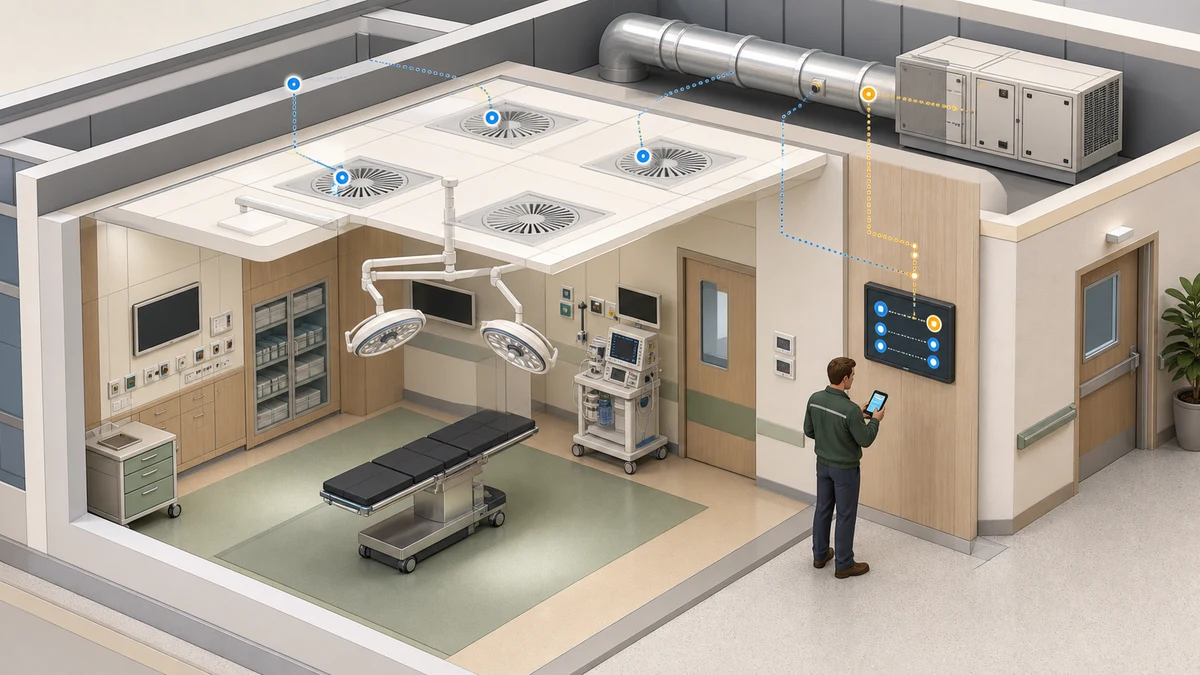
Turn fragmented estate data into hospital operational intelligence
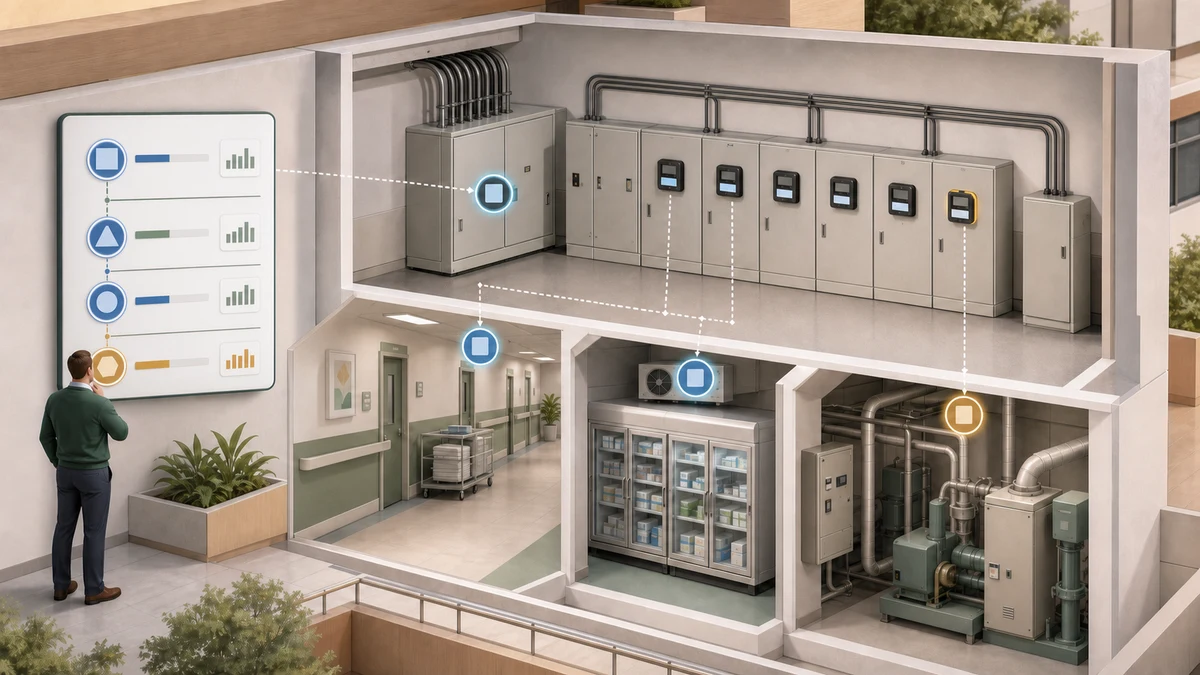
Hospital estates teams protect continuous care while managing complex plant, energy, cold storage and limited maintenance windows. Optim Energy brings selected operational evidence together so you can identify what needs attention, route a useful response and verify improvement across approved systems.
A complex estate is difficult to operate and improve when bills, BMS views, plant alarms, maintenance records and response history do not answer the same operating question.
You cannot separate essential 24-hour demand from avoidable out-of-hours energy use.
Plant schedules, overrides, alarms and maintenance evidence sit across different systems and do not produce one ranked action.
Heating, cooling, pumping or air-handling behaviour is unusual, but the cause, affected asset and next owner are unclear.
Room-condition, water, leak or refrigeration exceptions need a faster and more reviewable facilities response.
A retrofit or plant replacement is being scoped without a dependable operating baseline.
Energy reporting and decarbonisation decisions require consistent evidence from a live, changing estate.
What changes
Know what needs attention, give the responsible team useful evidence and verify whether the response worked.
Give estates, maintenance, energy and relevant assurance teams one clearer operating record while clinical, life-safety and validated systems remain under their responsible authorities.
Prioritise the right issue
Relate demand, plant state, conditions and service context, then rank the exception before committing people or capital.
Improve maintenance handoff
Give the responsible team the asset, location, trend, escalation and response history needed to investigate.
Improve within safe limits
Begin read-only and add compatible control only within approved boundaries, safeguards and local override.
Keep decisions reviewable
Retain baselines, trends and exports for verification, governance and applicable energy reporting.
Not every hospital building needs a broad deployment. Optim Energy will recommend a focused BMS audit, selected monitoring, an independent professional assessment or a simpler action when that is the more proportionate next step.
Core operational capabilities
Connect the evidence behind day-to-day estates decisions
Optim EOS is Optim Energy’s building-performance platform, delivered technically as a BEMS. It works alongside suitable existing systems to connect selected meters, plant signals, environmental conditions, water data and response history. Begin read-only; add compatible control only where authorised and commissioned with hospital-approved safeguards, fallback and override.
Plant and HVAC operational intelligence
Compare available boiler, chiller, pump, air-handling, valve, schedule and override signals to identify patterns that warrant investigation, such as out-of-hours operation, persistent overrides, abnormal cycling or heating and cooling at the same time. Route a ranked exception to maintenance with the asset, location and supporting trend. Compatible control follows hospital approval and specialist review.
Estate-to-circuit energy visibility
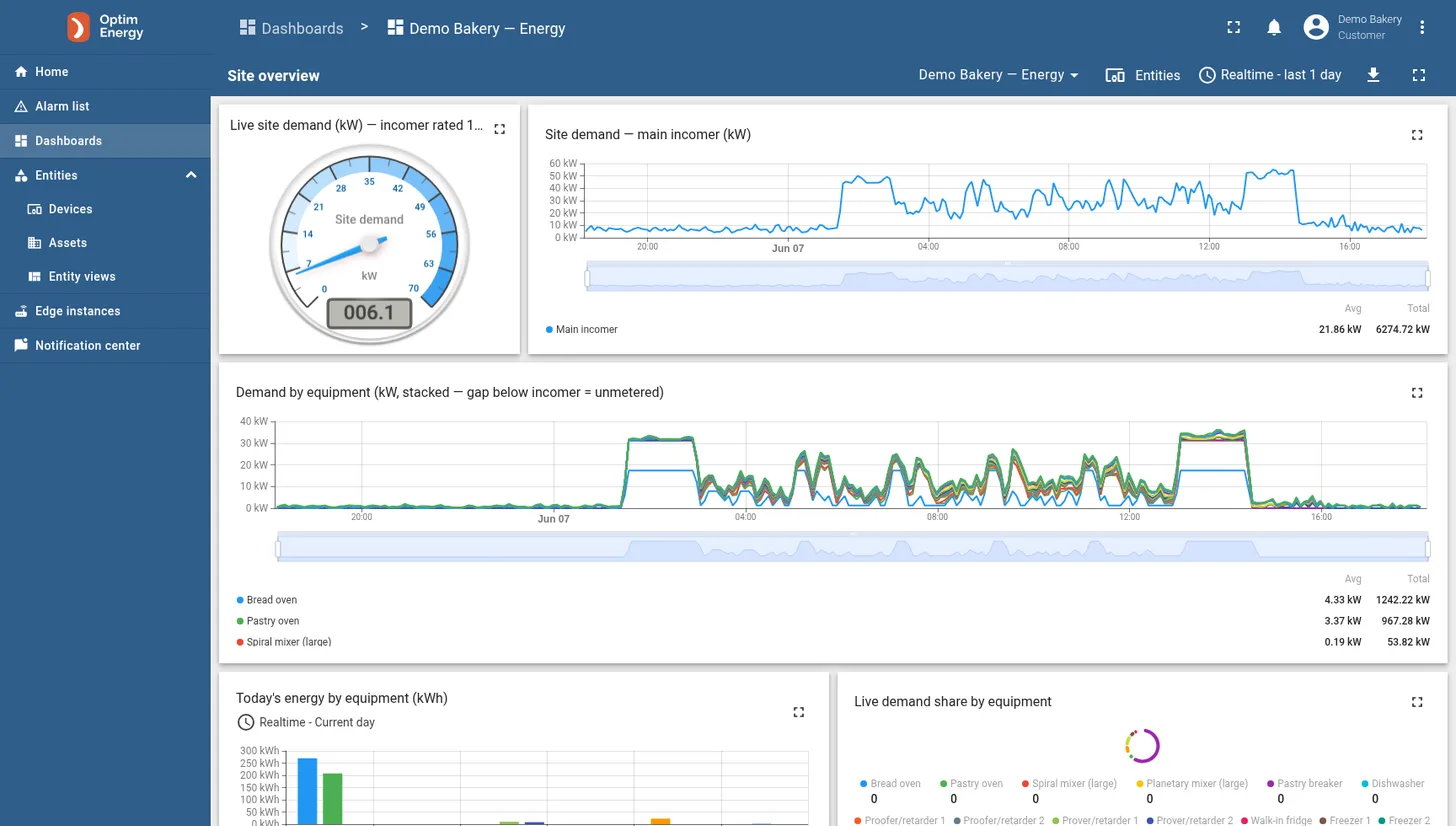
Organise incoming electricity and fuel, building meters and selected circuits around the estate. Relate demand to operating periods, weather and available plant states so the estates team can distinguish essential continuous service from unexpected baseload, define a dependable starting point and verify approved changes against it.
Cold-storage monitoring and response
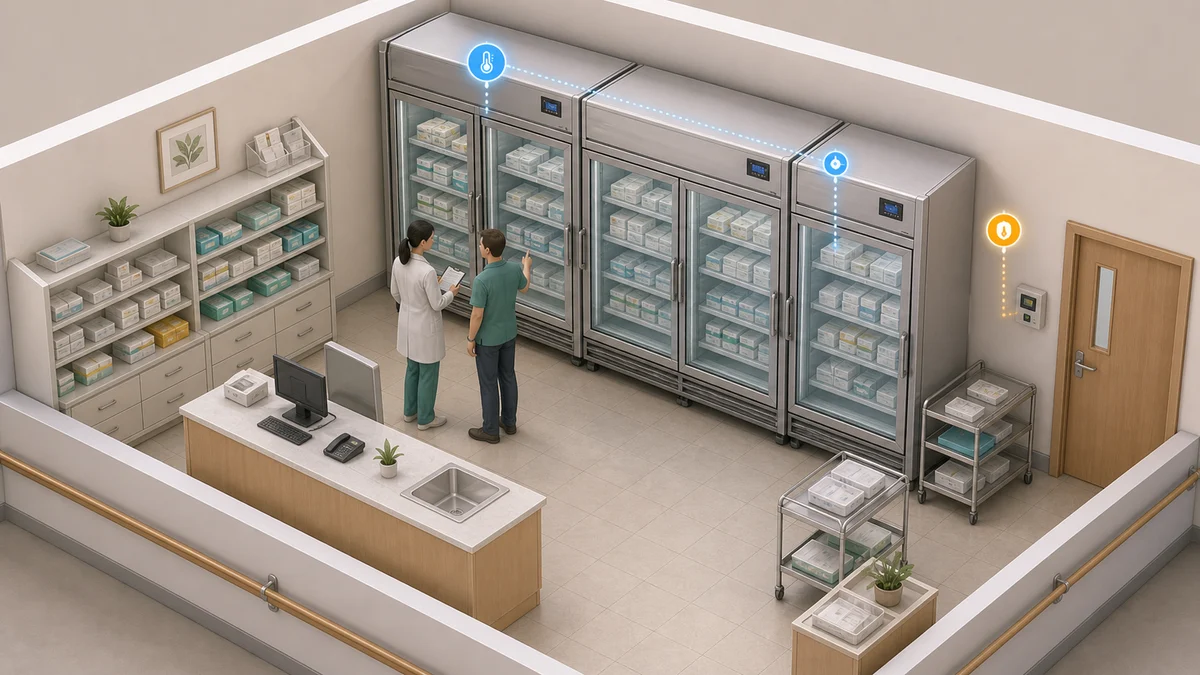
Where the responsible quality system approves the design, relate an independent calibrated temperature signal to door state, electrical load, room conditions and device health. This can help the responsible team distinguish an equipment problem, an open-door event and a communications gap. Product limits, mapping, qualification, validation, primary alarms, record review and excursion decisions remain authoritative.
Indoor conditions in suitable spaces
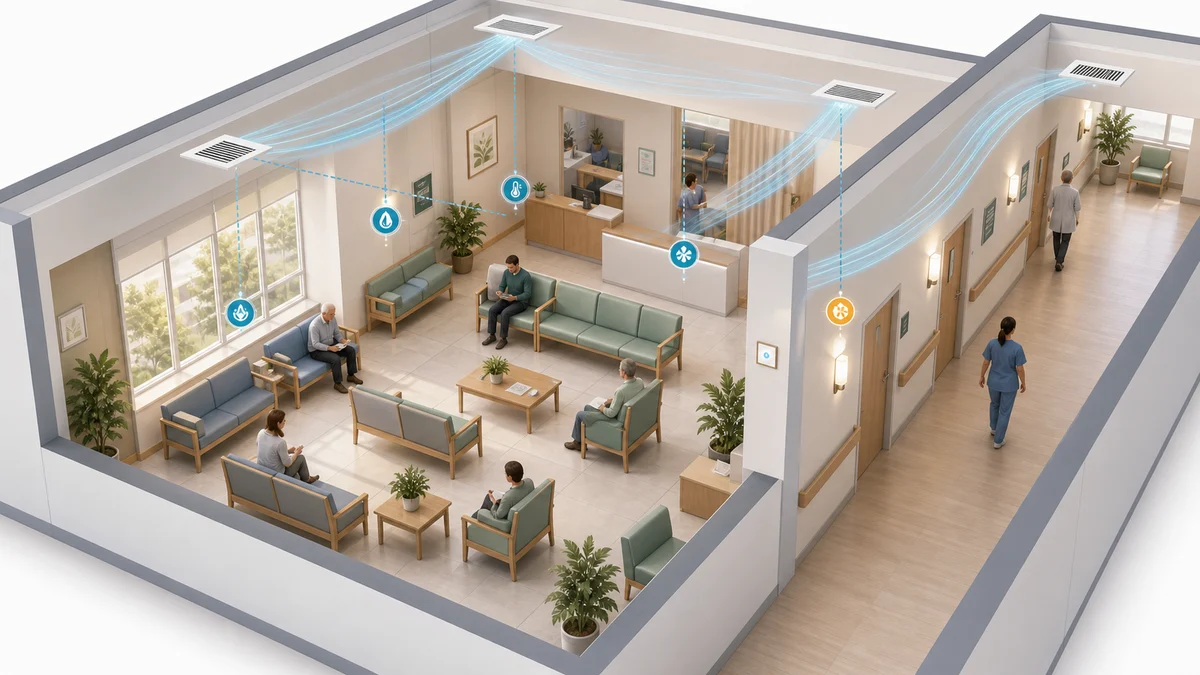
Temperature, humidity and CO2 trends can support investigation in approved offices, waiting areas, circulation and support spaces. Agreed exceptions can be routed to the appropriate team with a retained response history. Critical room pressure, air changes, filtration, isolation modes and infection-control requirements remain with the hospital’s approved systems and specialists.
Water, hot water and leak evidence
Where the water-safety plan permits, selected flow, level, return-temperature and leak signals can help estates teams investigate abnormal use or loss. Alerts can identify the affected zone and retain what happened next. These readings complement, and do not replace, the hospital’s water-safety plan, sampling, outlet checks, flushing, temperature control or specialist governance.
One operational view across approved systems
Optim EOS can bring selected readings, trends, device status, alerts, response history and exports into one role-scoped view while working alongside suitable existing BMSs, meters and plant systems. Each alert workflow defines the condition, recipient, escalation and out-of-hours owner. Work-order integration is assessed only where the hospital’s maintenance system exposes a suitable approved interface.
Hospital operational intelligence
Extend the same operating view into specialist hospital infrastructure
These capabilities receive the same operational focus but begin as bounded pilots. Each pilot requires a named hospital owner, specialist participation, an approved interface and a measurable outcome before any wider deployment.
Pilot capability
Theatre HVAC supervision
Combine approved theatre schedules or occupancy context with air-handling state, energy and existing environmental signals to identify unused full-flow operation and establish a measured baseline. Any supervised setback follows ventilation-specialist assessment, multidisciplinary hospital approval, clear local status, tested pre-start, fallback and staff override. Existing controls and safety interlocks remain authoritative.
Pilot capability
Critical-power visibility
Bring selected read-only generator, uninterruptible-power-supply, transfer-system, fuel and critical-load signals into an approved resilience view. The pilot can help organise test evidence and agreed exceptions; it does not control emergency power, guarantee continuity or replace certified protection, local alarms, scheduled tests, contingency plans or authorised electrical oversight.
Pilot availability and scope depend on the hospital’s installed systems, specialist governance, cybersecurity review and approval process.
Questions the evidence can answer
Turn fragmented estate data into safer investment decisions
Hospital energy and building performance depend on each site’s activity, equipment, constraints and starting condition. Build the case from that evidence rather than a universal saving or payback.
Where is demand coming from?
Build a meter hierarchy across incoming utilities, buildings, departments and useful circuits, then compare operating periods to distinguish essential continuous service from unexpected baseload.
Which plant pattern needs investigation?
Relate available schedules, run states, temperatures, valves, overrides, weather and service context, then give maintenance the asset, location and supporting trend before changing plant operation or proposing capital work.
Which conditions keep recurring?
Use approved room, cold-storage and water-service trends, together with device status and visible data gaps, to separate an isolated event from a repeated pattern without claiming clinical cause or compliance.
Did the approved response work?
Retain the alert, recipient, acknowledgement or response note and the post-action trend where these form part of the agreed deployment workflow.
What supports reporting and governance?
Consistent records and exports can support estates review, maintenance handoff, HSE energy management and applicable public-sector Monitoring and Reporting (M&R) preparation. The responsible body still owns its submissions, audits and certification.
Combine bills, interval data, activity, equipment, conditions, maintenance history, constraints, project cost and ongoing service cost. Savings and payback remain site-specific models until measured and verified.
What does a published Irish example show?
At St Mary’s Hospital in Dublin, an energy audit and BMS survey found poorly controlled plant and manual operation. SEAI reports measured savings from a combined programme of BMS, boiler-control, lighting, pump, fabric and solar work. Its exceptional starting condition and full project scope make this evidence for targeted investigation, not an Optim Energy result or a forecast for another hospital.
Start with one recurring hospital problem, its accountable owner, available bills and operating evidence, the meter and BMS landscape, known estate works and approval boundaries. Agree one primary measure, such as avoidable runtime, repeat exceptions, response time, data completeness or verified energy change. Optim Energy carries out the BMS audit and Optim EOS assessment; specialist assessments remain with the relevant professionals.
2
Design
Define the minimum useful signals, sensor and probe placement, measurement intervals, calibration evidence, integrations, data access, cybersecurity arrangements and measurable outcome. For each alert, agree the condition, persistence or delay, named recipient, escalation, out-of-hours ownership, local fallback and retained response record. The proposal separates installed cost, ongoing support, modelled benefit and assumptions.
3
Install and commission
Plan approved locations, radio coverage, access, infection-prevention controls, isolations and work windows around live care. Suitably qualified professionals secure and identify devices, then test readings, data quality, alert routing, device-health reporting, interruption and backfill behaviour, local precedence, fallback and override before handover.
4
Improve and support
Optim Energy reviews agreed performance and exceptions, investigates patterns with the responsible team, tunes the EOS deployment and maintains its hardware and software. The evidence determines whether to retain, adjust or expand the scope.
Possible project routes
Check support only after defining the operational case
Funding can support a justified project, but it should not define the hospital problem or scope. Confirm the operator, measure and current programme rules before procurement or expenditure.
Public-hospital pathways
Selected HSE facilities may progress through the HSE-SEAI Pathfinder partnership. It is selection-based, not an open grant. Monitoring evidence can support project definition and verification but does not guarantee selection or funding.
Eligible BMS and larger energy projects
A qualifying BMS installation or upgrade may fit the current SEAI scheme. EXEED or energy-contracting support may suit larger eligible projects. Applicant, scope, specialist, approval and timing rules still apply.
Usually not. Optim EOS is intended to work alongside suitable existing BMSs, meters and plant systems, beginning with selected signals and read-only integration. Any replacement, supervisory control or additional automation depends on compatibility, operating authority, cybersecurity review and the agreed engineering scope.
Can Optim EOS connect to clinical or life-safety systems?
Not by default. Medical devices, medical gases, fire systems, lifts, emergency lighting, emergency power, theatre and isolation ventilation, laboratory containment and other validated or life-safety systems remain authoritative. A pilot may assess selected read-only theatre-ventilation or critical-power signals only with hospital and specialist approval; local controls, alarms, interlocks and testing remain authoritative.
Does CO2 monitoring prove ventilation or infection-control compliance?
No. In suitable occupied spaces, CO2 can help investigate ventilation patterns. It does not measure infection, validate air changes, establish room-pressure performance or certify compliance. Critical ventilation remains with the hospital’s approved design, monitoring and specialist teams.
Can it support pharmacy refrigeration?
Yes, where the hospital’s pharmacy quality system approves the configuration. Optim Energy can provide suitable independent calibrated signals, configurable thresholds, device-health alerts, retained histories and exports as a secondary or integrated evidence layer. Supported sensors can buffer readings during a connectivity interruption and backfill them after reconnection. The quality system retains responsibility for product limits, mapping, qualification, validation, primary alarms, record review and excursion decisions.
How does an Optim EOS exception reach our maintenance team?
The agreed workflow can provide the asset, location, condition, supporting trend, named recipient, escalation and response history. Where the hospital’s maintenance or work-order system exposes a suitable approved interface, an integration can be assessed. Otherwise the same evidence can be routed through an agreed alert, dashboard or export.
Will installation disrupt care?
The method and work windows are agreed after survey around clinical activity, access, infection-prevention requirements and continuity. Wireless sensing may reduce cabling in suitable locations, but meters, gateways and integrations still require approved installation and commissioning. We do not promise zero disruption before the scope is understood.
Does Optim EOS fulfil SEAI reporting or healthcare compliance?
No. Time-stamped records and exports can support energy management, project verification, governance and applicable reporting preparation. The hospital or responsible public body owns its submissions, standards, audits, certification and healthcare obligations.
What happens if the platform, communications or power fails?
Local authoritative controls and alarms must continue safely. For supported configured sensors, local storage and retransmission can reduce gaps in the historical record after connectivity returns, but notifications may still be delayed or unavailable during an outage. Power, backhaul, visible data gaps, alert delivery, fallback, local override and escalation are designed and tested for the agreed deployment. Continuous platform operation does not imply a staffed 24-hour response centre or guarantee continuity.
Start hospital operational intelligence with one recurring problem.
Bring the problem, its accountable owner, available evidence, current response, desired measure, meter and BMS landscape and relevant approval constraints. Optim Energy will define the smallest useful first deployment and what would justify expanding it.